
You Are Being Watched. Do you know it?
Elon's campus is under constant surveillance. Many students have no idea.
By the time J.P. Labbe realized his bike was gone, the thieves were already off campus.
On Sept. 25, 2025, two men slipped into the Station at Millpoint apartment complex at Elon University, cut through a bike lock, and hauled the bike over a fence. They were in and out before anyone saw them. No camera captured the theft itself. Labbe, a senior at Elon University, had no reason to think the bike was coming back.
Two bikes, two blind spots
How a theft at Mill Point exposed gaps in Elon's surveillance network
What the thieves had not counted on was what happened next. As they drove off campus, Elon's license plate readers quietly logged the vehicle plate number and direction of travel. The system scans traffic around the clock, collecting data most people never notice unless police need to retrace someone’s movements.
Over the following weeks, officers threaded together footage from cameras across the campus network, followed the plate data to Forsyth County and tracked the bikes to Winston-Salem. Both were recovered. The case was filed in Alamance County, where the theft had occurred.
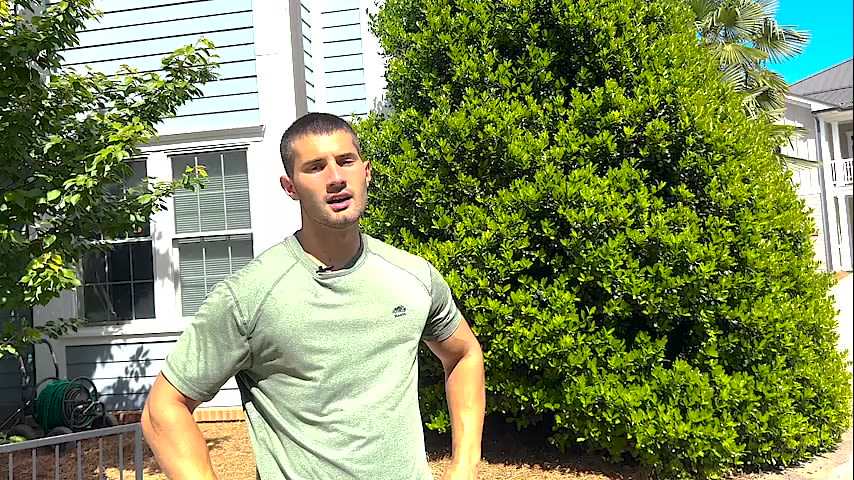
The moment of the crime itself had slipped through a gap in the coverage, but the infrastructure surrounding it had closed the case anyway. Most of the students walking past those cameras every day have no idea any of it is there.
How many surveillance cameras does Elon use?
Take a guess before reading on.
The answer is D
Elon operates more than 500 high-definition security cameras, plus 14 license plate readers, covering roads, walkways, parking lots, and buildings across campus.
Source: Elon University

A surveillance camera monitors the exterior of Hook, Brannock and Barney Hall on Elon's campus. Photo taken by Erin Hroncich.
A surveillance camera monitors the exterior of Hook, Brannock and Barney Hall on Elon's campus. Photo taken by Erin Hroncich.
What the cameras see
The cameras are positioned along roads and walkways, in parking lots, and inside buildings. Access to footage is limited to campus police officers, who may share it with other law enforcement agencies during criminal investigations. The university says footage is only reviewed in response to specific incidents, not monitored in real time on a general basis. Elon Campus Safety and Police were not available for comment on the scope of the surveillance system and its policies.
Elon does not currently use facial recognition or AI-driven video analytics. Chief LeMire has said the university has no concrete plans to implement either. But he has acknowledged the technology is on his radar. "I think the pros outweigh the cons," he said in 2023. "Artificial intelligence is still a little bit on the new side. I'd rather somebody work out the bugs for us."
How we got here
A timeline of surveillance at Elon
Tap each entry to expand
Early 2000s
First cameras installed in parking lots
Elon begins installing security cameras, starting with campus parking lots. The rollout is met with concern from some community members who worry about being constantly watched.
Source: Elon University
2012
Dennis Franks becomes chief
Dennis Franks joins Elon as Director of Campus Safety and Police, bringing experience with in-car dashboard cameras from his prior law enforcement career. He oversees significant expansion of the surveillance network.
Source: Tommy Hamzik
Late 2013
Body cameras purchased
Elon campus police purchase their first body cameras. Officers undergo a training period before the cameras are put into use. The department acquires four cameras to be checked out by officers each shift.
Source: Tommy Hamzik
August 2014
Body cameras go live
Body cameras are fully launched at the start of the 2014-2015 school year. They are designed to provide impartial records of officer encounters and can be used to validate or disprove complaints made against police.
Source: Tommy Hamzik
2015
500+ HD cameras across campus
By September 2015, Elon has installed nearly 550 high-definition cameras covering roads, walkways, parking lots, and buildings. The system also includes 14 license plate readers capable of running tags through state databases. Elon is named one of the "50 Safest College Towns in America" by SafeWise.
Source: Elon University
2015
Meditation garden camera added
After vandalism at the meditation garden next to the Numen Lumen Pavilion, where someone pushed the Kugel ball off its fountain, Elon adds a camera to the previously unmonitored space. The incident prompts a review of coverage gaps on campus.
Source: Elon University
Feb. 2023
AI surveillance enters the conversation
Then-Chief Joe LeMire attends a North Carolina campus law enforcement conference where AI surveillance software is discussed. He says Elon has no current plans to implement AI tools but acknowledges other campuses are adopting them. He notes AI-assisted vehicle tracking as potentially more useful than social media monitoring.
Source: Elon News Network
April 2026
Surveillance used in assault arrest
Following an assault in the Mill Point neighborhood involving a gun, campus police use their surveillance network as part of an investigation that leads to the arrest of Antonio Burns of Gibsonville within four days. Burns faces multiple charges including felony possession of a firearm on educational property.
Source: Elon News Network
Evan Small, a professor at Elon University specializing in student wellness and social justice, sees both sides of the story.
"There's a line between safety and surveillance." Small said. "For the most part, at least from my perspective, it tends to lean more on the safety side."
Small points to the physical design of campus as itself a form of control, the layout of buildings, the placement of open spaces, that shapes how students move and are seen. But when it comes to cameras specifically, his verdict is nuanced.
He notes that Elon's designated protest site, Speaker's Corner, does not have a camera directly on it. A camera on an upper floor of a nearby building looks out over the area, but Small says he finds that acceptable given that the campus is open to the public.
A System With Many Eyes
The cameras do not operate alone. Resident advisers are embedded in the same infrastructure, a first layer of human observation that connects student life directly to campus police.
Nikki Guevara, an RA in Elon's Danieley neighborhood, describes a system of handoffs. RAs handle the everyday friction of residential life. When something escalates beyond their scope, they call campus security. The cameras and the people work in parallel, covering the same ground from different angles.
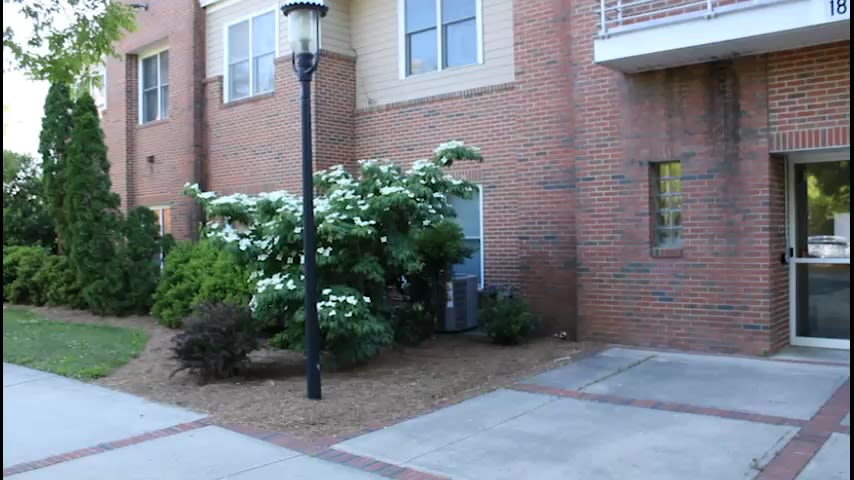
Inside the residence halls, camera coverage is limited. Most dorms keep surveillance to common areas. Smith Hall, Elon's only all-male dormitory and its most documented for recurring issues on campus, is the exception.
"In residence halls, the only one that actually has cameras in it is Smith," Guevara said. "Danieley and most of them have them in, like, the common space, but that typically is as far as the cameras stretch. So they do give you a lot of privacy in terms of that."
That privacy has a ceiling. Paul Tongsri, assistant dean for student success and retention, works closely with students navigating issues on campus. He describes the cameras as most valuable not as a deterrent, but as a tool for reconstruction after something goes wrong.
"A camera system allows you to get a real sense of what occurred in the moment," Tongsri said. "In some cases, to go back in time or forward in time, to determine where the people involved were a minute before the incident occurred. Similarly, you can go forward in time to see where they go after — those kinds of things to better establish a timeline of events."
April 5, 2:30 in the morning
In April, the limits and capabilities of Elon's surveillance network were tested again, this time in more serious circumstances. Shortly after 2:30 a.m. on April 5, a man not affiliated with the university assaulted a student near the Love Family Student Commons building in the Mill Point neighborhood, allegedly at gunpoint. Burns placed his hand over the female student's mouth and pushed her into a nearby bush. The student was able to escape and find a safe location to call police. An E-Alert went out.
Elon University Police Department vehicles sit outside the department’s station in the Oaks neighborhood at Elon University on May 5, 2026. Photo by Erin Hroncich.
Elon University Police Department vehicles sit outside the department’s station in the Oaks neighborhood at Elon University on May 5, 2026. Photo by Erin Hroncich.
Four days later, campus police announced an arrest. Antonio Burns, 36, of Gibsonville, was taken into custody with assistance from the Gibsonville Police Department, and according to the police report, surveillance footage was used in the investigation. Burns faces charges of felony possession of a firearm on educational property, misdemeanor assault on a female, misdemeanor sexual battery and misdemeanor false imprisonment, all stemming from the same incident. The case was filed in Alamance County, where the assault occurred, and Burns was held with no bond.
Elon University Police Department's public record of the incident at Millpoint neighborhood. Photo taken on May 5, 2025 by Erin Hroncich.
Elon University Police Department's public record of the incident at Millpoint neighborhood. Photo taken on May 5, 2025 by Erin Hroncich.
The response did not stop with the arrest. In the weeks that followed, a marked police car was stationed regularly in the Mill Point parking lot. It has since been removed.
The cameras have solved crimes, recovered stolen property, and helped bring an armed suspect into custody in under five days. Whether students know the extent of what is watching them is a different question entirely.
 Built with Shorthand