
The land the won't come back
The vanishing farmland of Alamance County
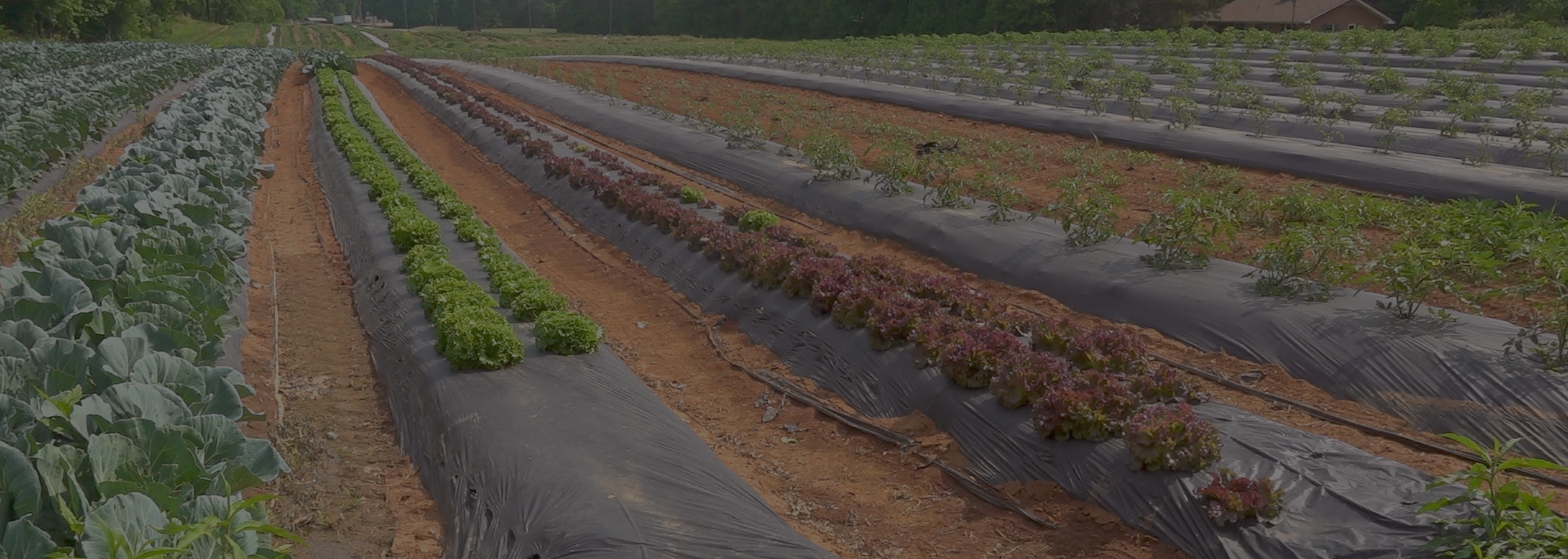

Pulling onto the dirt road to Smith Family Farms the first thing you notice is the explosion of red and pink flowers- overflowing the greenhouses and escaping into the yard. Copper, the family’s 11-year-old dog, is sure to greet anyone who visits, insisting on some love.

Loyal customers come weekly to purchase their geraniums for the summer, and stock up on fresh strawberries and vegetables. Some have been coming for decades; chatting with the Smiths and spending their Saturday mornings in the sunshine.
The Smith family has farmed this Alamance County land for generations making the change from tobacco, to flowers and produce in the 1990s. The care in their work shows in every plant that flourishes under their hands. This is a place built on pride, patience and decades of hard work.
It is exactly the kind of place that is disappearing.
Even as Smith Family Farms continues to flourish as a beloved fixture of the community, farmland has been disappearing from Alamance County for decades, quietly, but at a dizzying rate.
Since 1997, the county has lost 61% of its farmland. That is not a temporary dip or a seasonal fluctuation. According to the USDA Census of Agriculture, Alamance County has gone from 178,173 acres of working farmland to just 68,769, a loss of more than 109,000 acres in less than three decades.
Jacob Rutz, an associate professor of environmental studies at Elon University who specializes in sustainable food systems, says the forces behind that loss are no mystery.
“North Carolina is one of the most popular states for people to move to,” said Rutz. “And the agricultural land in those spaces is some of the first to go, it's nice flat land. While it's ideal for agriculture, it's also really convenient for development."
North Carolina ranks third in the nation for fastest-growing states, sitting at number one for domestic migration, making farmland prime real estate for developers. For families who have farmed for generations, that pressure can become an incredibly tempting offer, especially when farming itself offers little financial security.
Smith knows this reality firsthand, having seen it in her own community.
"Once it goes from being owned by a single family, it may be inherited by several heirs, and those heirs often won't agree on what to do with that farmland,” said Smith. “The simple thing, and the lucrative thing, is to then sell it."
Even families like the Smiths who have been successful and are committed to keeping their farm, face an exhausting reality. Several family members hold full-time jobs outside of the farm in order to receive things like health insurance.
"Most of the adults in the family also work public work,” said Smith, “Because you really still need benefits, and you need the stability of a year-round job and paycheck."
Farming is not just a job or career option, in many ways at its core the demands of agriculture transform it into a lifestyle, one that you need to fully commit to.
"Farming is really hard,” said Rutz. “It costs a lot of money. The resources to make a farm successful can be challenging. And so whether it's a farm goes bankrupt because they couldn't make enough to make it work, or maybe the farmland is being inherited by the next generation, and they're just not interested in that lifestyle, because farming is both a business and a lifestyle in many ways."
There are all of these challenges and pressures before even considering the things no one has any control over: the weather. Farms are entirely dependent on whims of the climate, something that has only become more unpredictable.
"We're in one of the worst droughts in North Carolina's history right this very moment, April 2026,” said Rutz. “The more we lose farms in our region, the more we will be susceptible to needing to import more food or depend on it coming from further away."
Loss of farmland itself has a concerning impact on the environment. Rural and agricultural communities are often an essential backbone to land preservation.
"We do see it in the hollowing out of our rural communities,” said Rutz. “And they're the ones who have sort of the first line of defense for environmental sustainability of our land."
The soil on farms themselves are a factor in carbon control and losing that has a damaging effect according to Rutz.
"Soils have a capacity to sequester carbon or hold carbon that's in the atmosphere,” said Rutz. “Agricultural lands can be a part of the solution. It's a lot harder to do that in more urbanized areas."
There is no reversal. Agricultural land that is rezoned for development will never return.
"Once you sell farmland and you sell it to any developer, whether it be industrial or residential, it's not going back to farmland,” said Smith. “It's a permanent loss."
Farming in North Carolina is in decline, the average age of an US farm operator is 58 according to the USDA census, underscoring what is rapidly becoming a generational succession crisis with no clear solution in sight. Without any intervention, North Carolina could see 1.2 million acres of farmland repurposed by 2040, according to the American Farmland Trust.
The Smith family has been stalwart in trying to prevent rezoning. In recent months, developers have moved to purchase and rezone several sections of agricultural and pasture land for residential development. Most notably along the Mountain to Sea Trail, a protected corridor connecting the North Carolina mountains to the ocean.
The community has tried to fight back, showing up to county commissioner meetings.
"The developer was there, the community group was there,” said Smith. “The developer presented his plan, the community presented their reasons why they opposed it, and in that particular meeting, they opposed the request to change the zoning, unanimously, eight to zero."
But it's an exhausting process with no end in sight.
"That was winning a battle, not a war. He has appealed, and so now it's just a process. How long can we fight that? How long can we keep that neighborhood out? Who knows," said Smith.
Support for farmers is also a challenge, particularly when looking at the usual crops produced by smaller, family owned farms.
"They (USDA) refer to things like fruits, vegetables and nuts as 'specialty crops' coded lingo that says all the things truly necessary for our diverse, micronutrient-heavy diet are specialty, such that they get a much smaller portion of financial funding," said Rutz.
Another issue Rutz highlighted was the struggle smaller farms often faced in getting government backed support.
"The agriculture system is incredibly consolidated,” said Rutz. “A lot of the land owners, a lot of the industry that processes the food, a lot of it is owned and operated by a handful of multinational corporations, which do capture a lot of the financial investments from state and federal governments."
Small businesses are a possible part of the solution. Bob Thomas, known as Gardener Bob, is the owner of a homestead kitchen creating his own baked goods, kombucha and pickles. He is also someone who values where he is getting his ingredients, prioritizing local ingredients and making him dependent on North Carolina agriculture.
Thomas’s business is also Got to Be NC certified, meaning both his products and sourcing is local. He is vocal about the importance of buying local.
"Buying local,” said Thomas. “Regardless of whether you're putting it in your body or on your body, is so absolutely important for our agriculture."
Beyond buying local, which is not always affordable, Thomas encourages voting and paying attention to local representatives.
"You vote with your dollars and you vote with what you eat," said Thomas.
Rutz emphasized this point, highlighting the importance of local officials and the impact they have on sustainability and local agriculture.
But for many families, buying local is not a realistic option. The burden of saving farmland cannot rest on the wallets of consumers alone, which is why advocates argue that policy change at the local level is just as critical as individual purchasing decisions.
"I think we as a community and culture need to be more aware of those positions, local politics that focus on land and conservation, because we sort of get obsessed with presidents and governors and senators, but the local stuff has a huge impact,” said Rutz. “It can really mean the difference between an orientation towards greater sustainability or a more business-as-usual approach."
There is also a network of non profits, either attempting to close the gap as a support network for farmers, intervening so that a bad season or missed payment doesn’t cause a farm to go under or to bring light to the issue. Some of these non-profits include RAFI, Land Loss Prevention Project and BLLNAP.
"There are some really incredible nonprofits working both with all farmers and then some focusing within BIPOC communities," said Rutz, "because we're at a national moment where, basically since emancipation, there is the least number of Black and brown farmers this country has ever seen."
That crisis of access runs deeper than most people realize. While the broader conversation around farmland loss tends to focus on economics and development pressure, the racial dimensions of land loss tell a separate and starker story.
"It's an incredibly bifurcated system of access," said Rutz, "and it's only gotten worse since the 1920s. Most things in the civil rights dimension have only improved since then. That has not."
For farmers already in financial trouble, some organizations offer direct intervention — working with individuals to restructure debt and find a path forward before the bank comes for the land itself.
"Some groups specifically work with individuals to say hey, if you're experiencing financial trouble, let's work through how we can get you on the right side of that," said Rutz. "Oftentimes the thing a bank could seize if you default is your land, in which case farming is done."
Back at Smith Family Farms, the afternoon light is settling over the greenhouses and Copper has retreated to the shade. Tamara Smith knows what her family is up against but she also knows what they are fighting for.
"It's a source of pride, and it keeps the family together," said Smith. "We're still a family that sits down at mealtime together and eats together."
That table, like the land beneath it, did not come easy. And as Rutz warned, once the bulldozers come in, there is no going back.
But, the flowers are still blooming at Smith Family Farms.

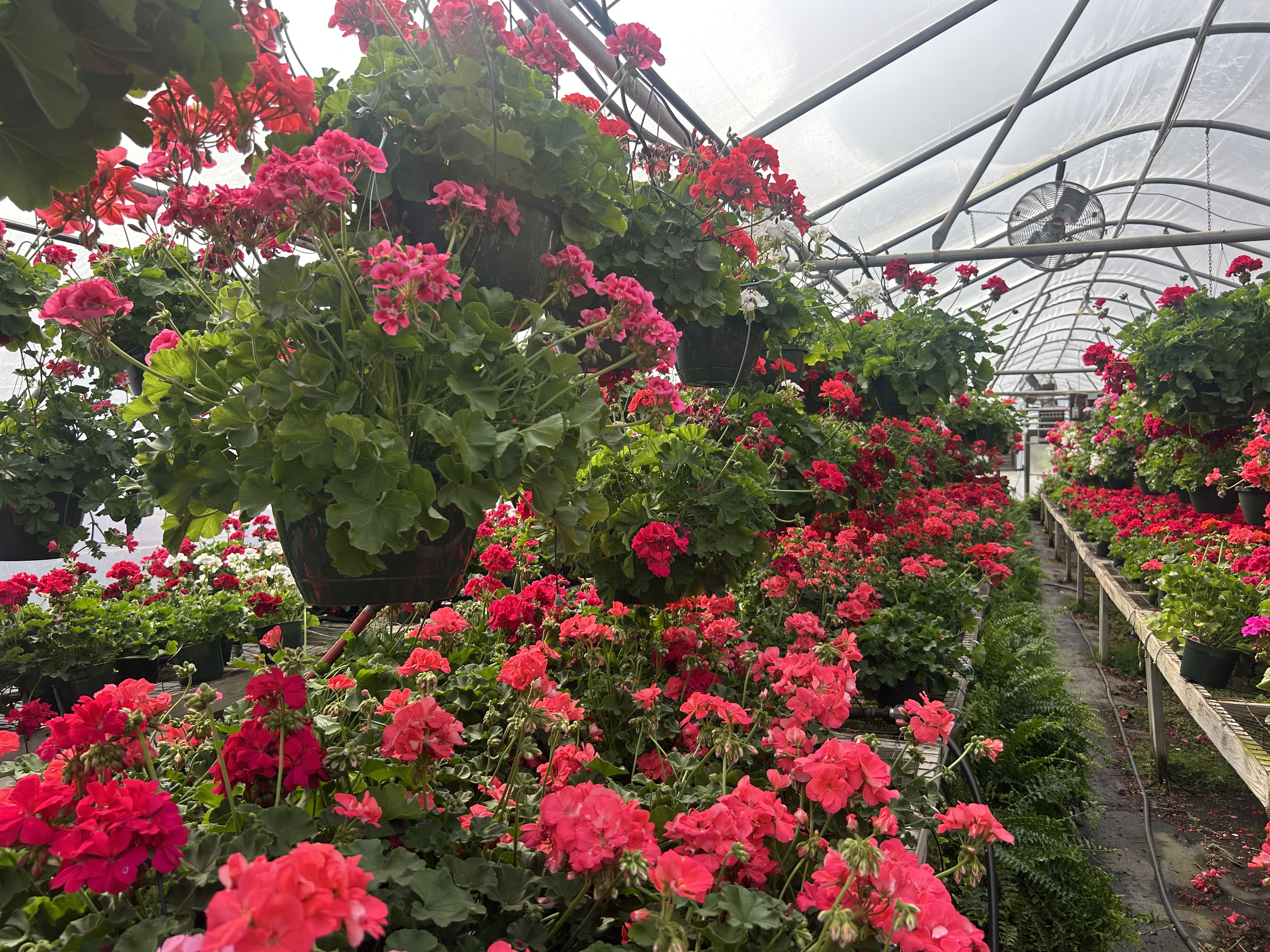
Flowers overflow the greenhouses at Smith Family Farm. Photo Credit: Cassie Weymouth
Flowers overflow the greenhouses at Smith Family Farm. Photo Credit: Cassie Weymouth

Copper the family dog greets all visitors including the camera. Photo Credits: Cassie Weymouth
Copper the family dog greets all visitors including the camera. Photo Credits: Cassie Weymouth
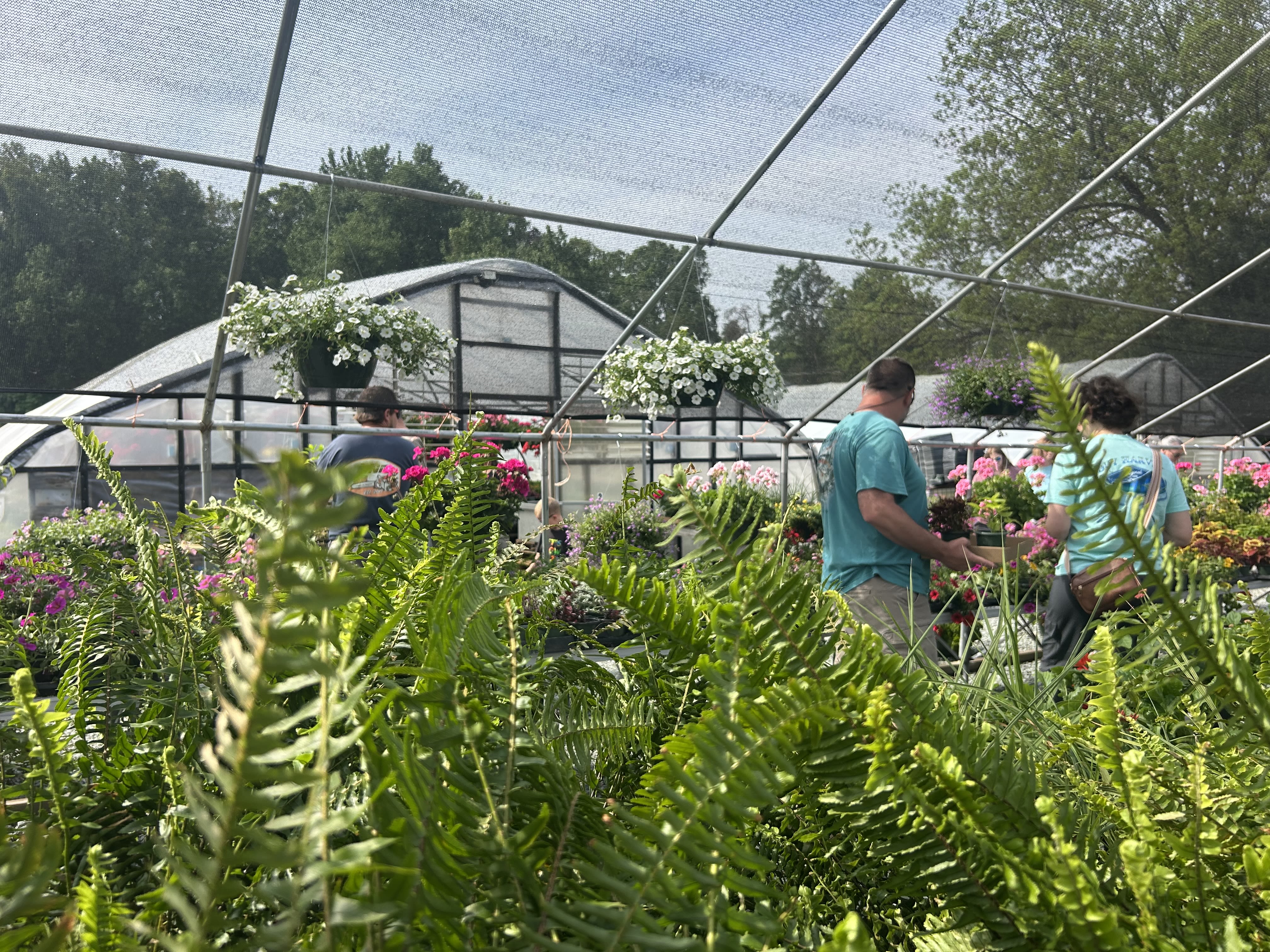
Saturday morning shoppers browse the garden plants and produce offered in various greenhouses. Photo Credit: Cassie Weymouth
Saturday morning shoppers browse the garden plants and produce offered in various greenhouses. Photo Credit: Cassie Weymouth

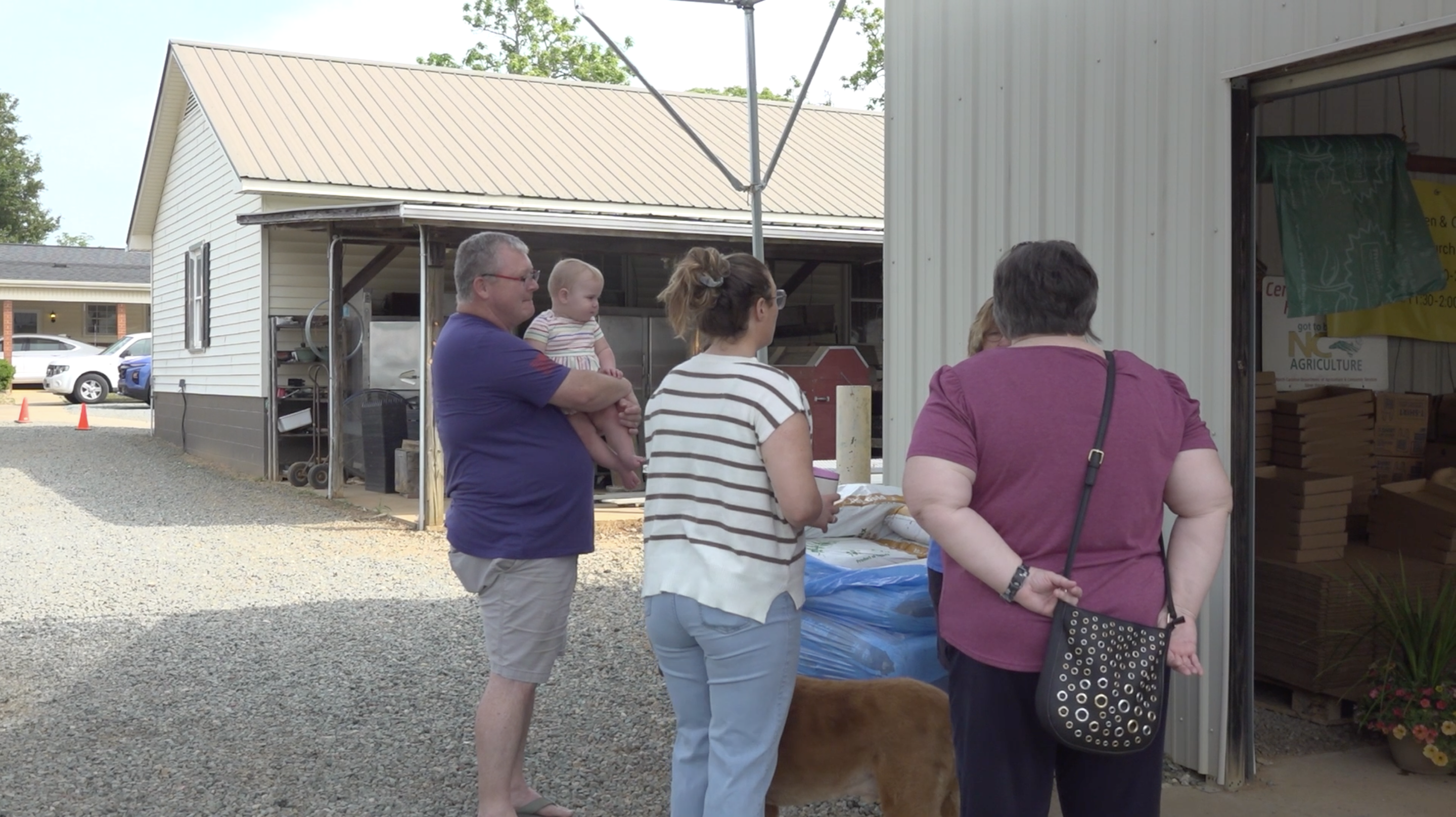
Grandparents and their visiting grandchild chat with Tamara Smith about the farm. Photo Credit: Cassie Weymouth
Grandparents and their visiting grandchild chat with Tamara Smith about the farm. Photo Credit: Cassie Weymouth

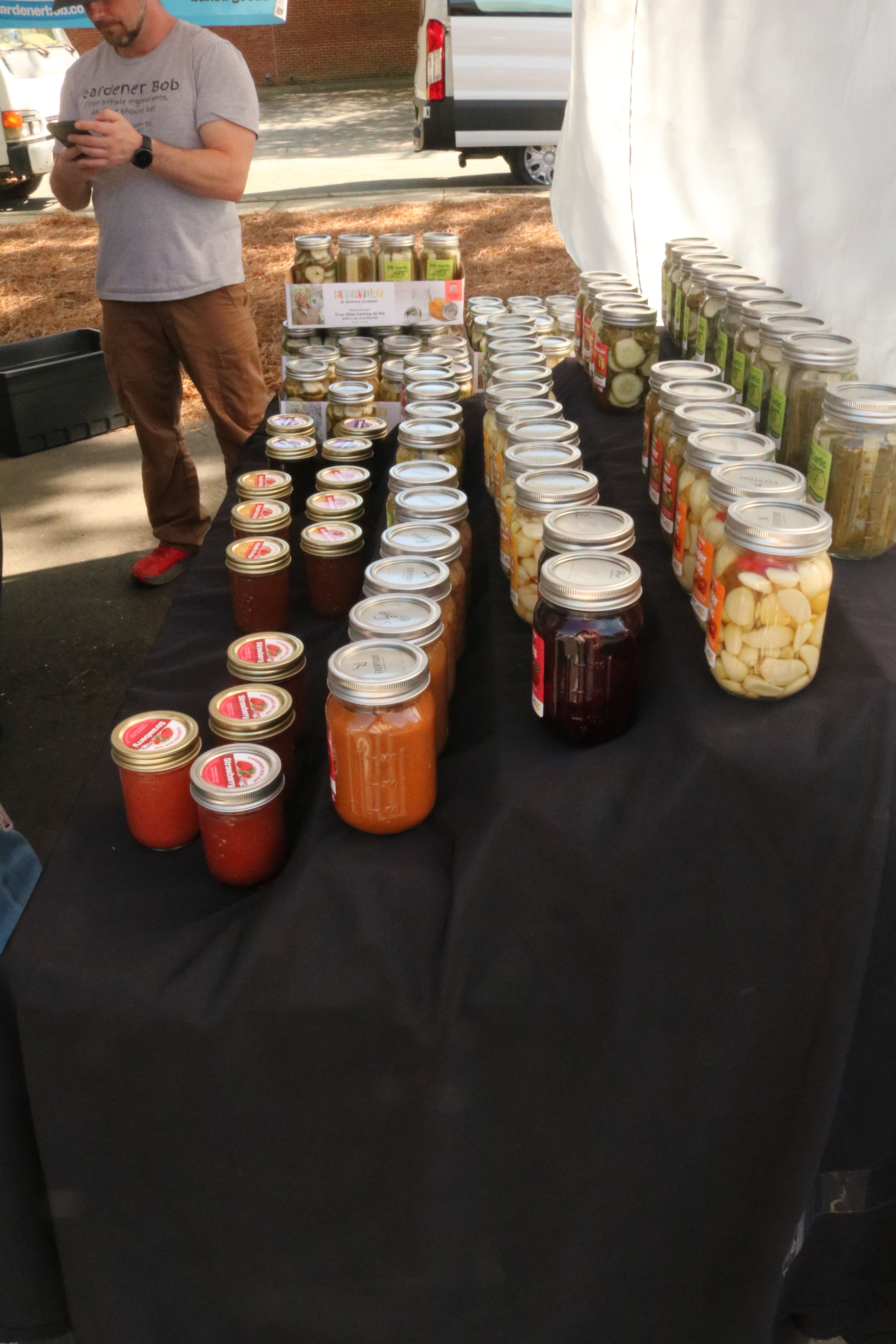
Gardener Bob lines up his homemade pickles and jams, all with locally sourced ingredients. Photo Credit: Cassie Weymouth
Gardener Bob lines up his homemade pickles and jams, all with locally sourced ingredients. Photo Credit: Cassie Weymouth
 Built with Shorthand