
Stuck in the middle: A story of Burlington's resilience

From textile town to bedroom community
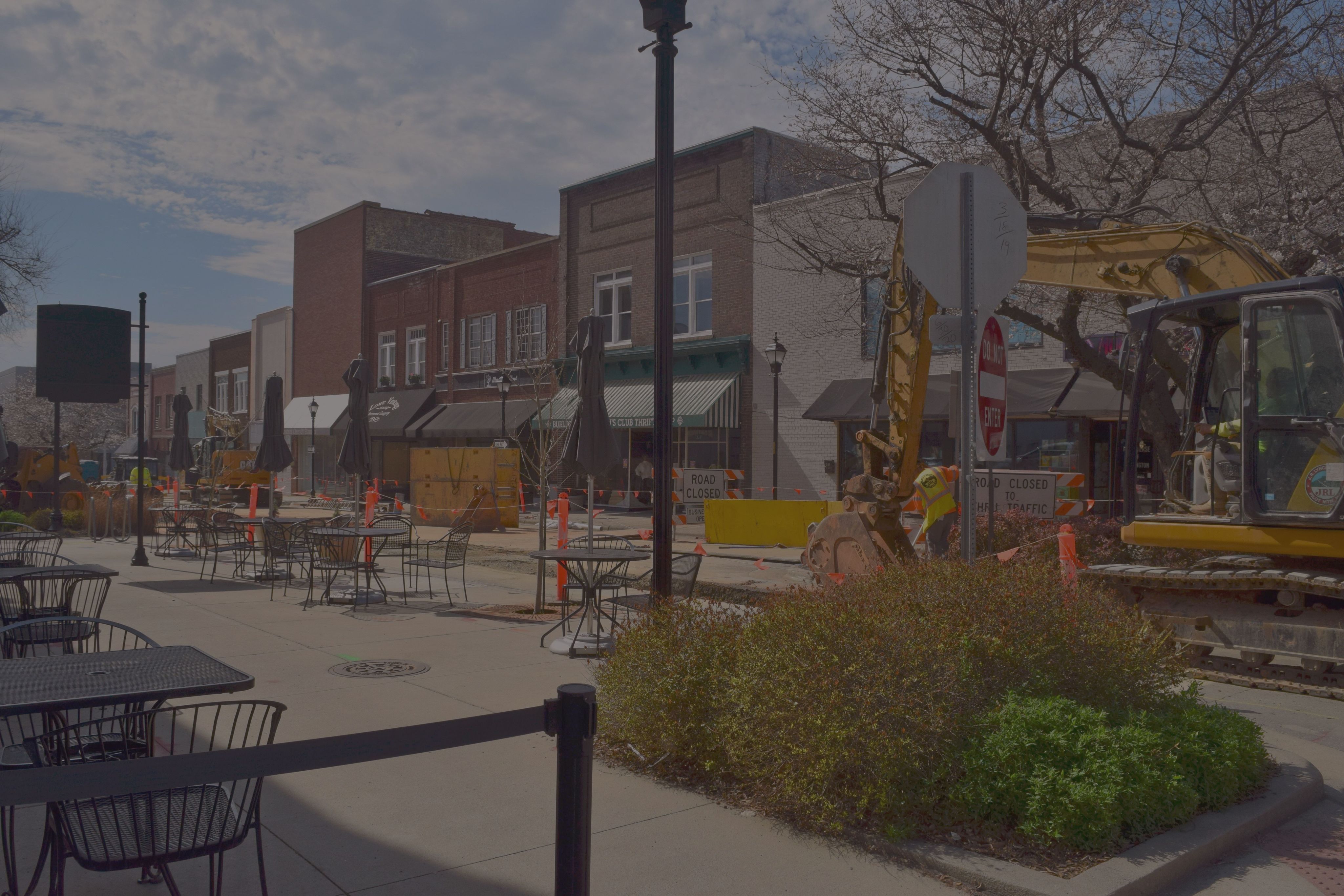
For generations, the hum of textile mills helped define life in Burlington. Mill jobs supported families, downtown stores were busy dawn to dusk and nearby communities like Graham grew along with the region’s manufacturing economy. But as the textile industry declined and economic forces shifted during the late 20th century, Burlington transformed to survive the changing times.
Burlington’s story illustrates a challenge faced by many post-industrial communities: economic diversification does not always translate into social cohesion. While new development and small businesses have begun reshaping parts of the town, the networks that once formed around mill work, neighborhoods, downtown commerce and generational employment, largely disappeared with the industry. Burlington is rebuilding its economy while still grappling with what binds it together.
Today, Burlington would be considered a midsized town with sprawling strip malls. It is connected to larger cities by interstates like the I-85 and I-40 corridors built in the 1960s. Never quite a small-town, nor an urban center, it’s a difficult place to be according to Ryan Kirk, a professor of history.
“A successful downtown area has activity through out the day, throughout the evening, throughout the weekend,” Kirk said. “A viable night life is hard to pull off in a mid-sized town like this, which doesn't have quite as much money as larger cities would. And then if you're trying to be the quaint small town, well it's hard to compete with the true small towns that are unique and quaint.”

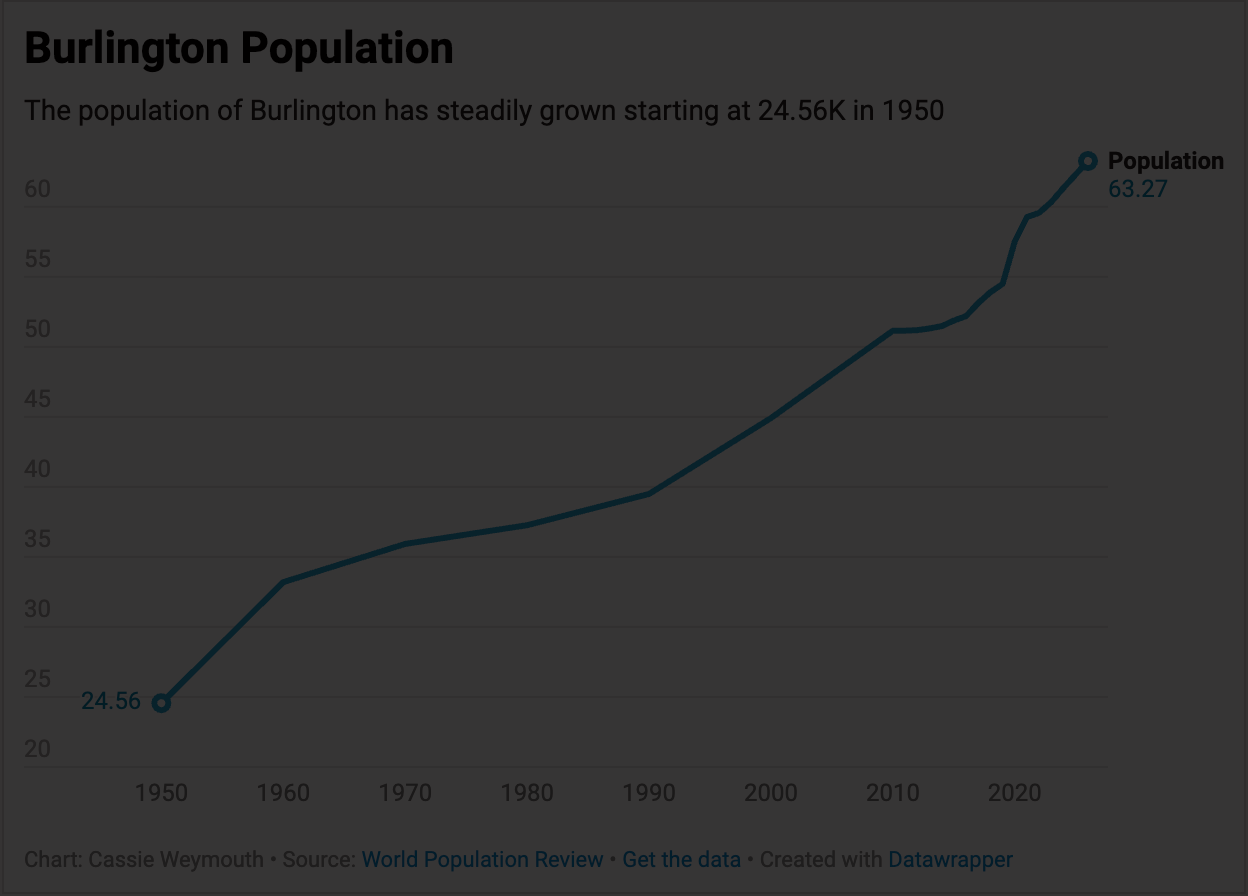
Burlington is a far-cry from a ghost town having steadily increased in population since the early 1900s. The population has already jumped 10% from the last census in 2020 from 57,500K to 63,300 in 2026.
A town that once contained just one high school, now has nine in the Alamance - Burlington School System. A more diversified portfolio of business has also arrived in Burlington since its textile days, with Labcorp and Duke Energy being some of the largest companies in the area. The problem is not centered around a lack of economic development or population growth. The issue is a steady loss of community, an issue reflected in towns across the U.S.
Burlington is trying to cultivate a sense of community in today’s world, an effort that started and has been ongoing since the '60s. The town has been through several revitalization efforts, with varying levels of success. Much of this struggle stems from the middle ground where Burlington sits.
“You're stuck in the middle,” Kirk said. “And if I had a thesis about what Burlington is, that could phrase it very well.”

For Sam Huffstettler, a resident of Burlington for over 60 years, the town has transformed from his childhood. Once a community where the downtown was its soul and church its heart, much has been replaced by massive chain stores.
Back when Huffstettler was in high school, downtown was once the place to see and be seen, with teenagers making Main Street their own personal stage.
“Everybody would go to town and get on Main Street and cruise all the way to the end and then turn around, then cruise all the way back out to both extremes of town,” Huffstettler said.
Downtown was where residents went for dinner and a movie at The Paramount, did their back-to-school shopping in department stores, bought their groceries, had brunch after church and went for strolls on weekends. Downtown was slowly replaced; first by shopping malls, then retail giants, and now online shopping and social media.
Church was a place not just for worship, but for social gatherings, youth groups and a supportive community.
“Everyone knew what church your family went to back then,” Huffstettler said. “It was more than just Sunday morning, this was people you grew up with, ate with, learned with.”
Church attendance in the U.S. is the lowest it has ever been in modern history. The question for Burlington now is what spaces can replace that and what does a sense of community mean in a world of accelerating technology and growing distance.
Huffstettler grew up in the textile golden age, and spent the majority of his career selling textile equipment to the region. That is until the industry faded mostly into memory for the town of Burlington.
“I went from selling heavy textile equipment to selling foil grade automotive tray furnaces,” said Huffstettler. “Our product line diminished. The demand diminished. When people stopped growing, people went bankrupt.”
Huffstettler was just one of many who lost their jobs. Burlington had been a single industry town up until that point forcing the town to reinvent itself when textiles left.
“In Burlington itself, well over 50% of the employment was manufacturing and textiles,” said Kirk. “And so these are huge job numbers that just kind of disappear, and then, like most post industrial cities, having to recreate itself is a very long and challenging process.”
Recreation is clear in the zoning changes in Burlington. The city's 2015 Comprehensive Plan, "Destination Burlington," set a goal to promote the redevelopment of former industrial properties as catalyst sites for new investment. What were once textile mills and manufacturing floors, are steadily being rezoned for housing and mixed use, their old footprints reimagined for a city no longer defined by the industry that once shaped it.
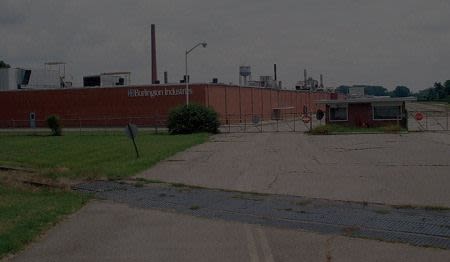
The textiles industry is Burlington’s history. Once known as the ‘Hosiery Capital of the South,’ there were over 10 mills running, including Burlington Industries which at its height was one of the largest and most diversified manufacturers of textile products in the world at the end of the 20th century.
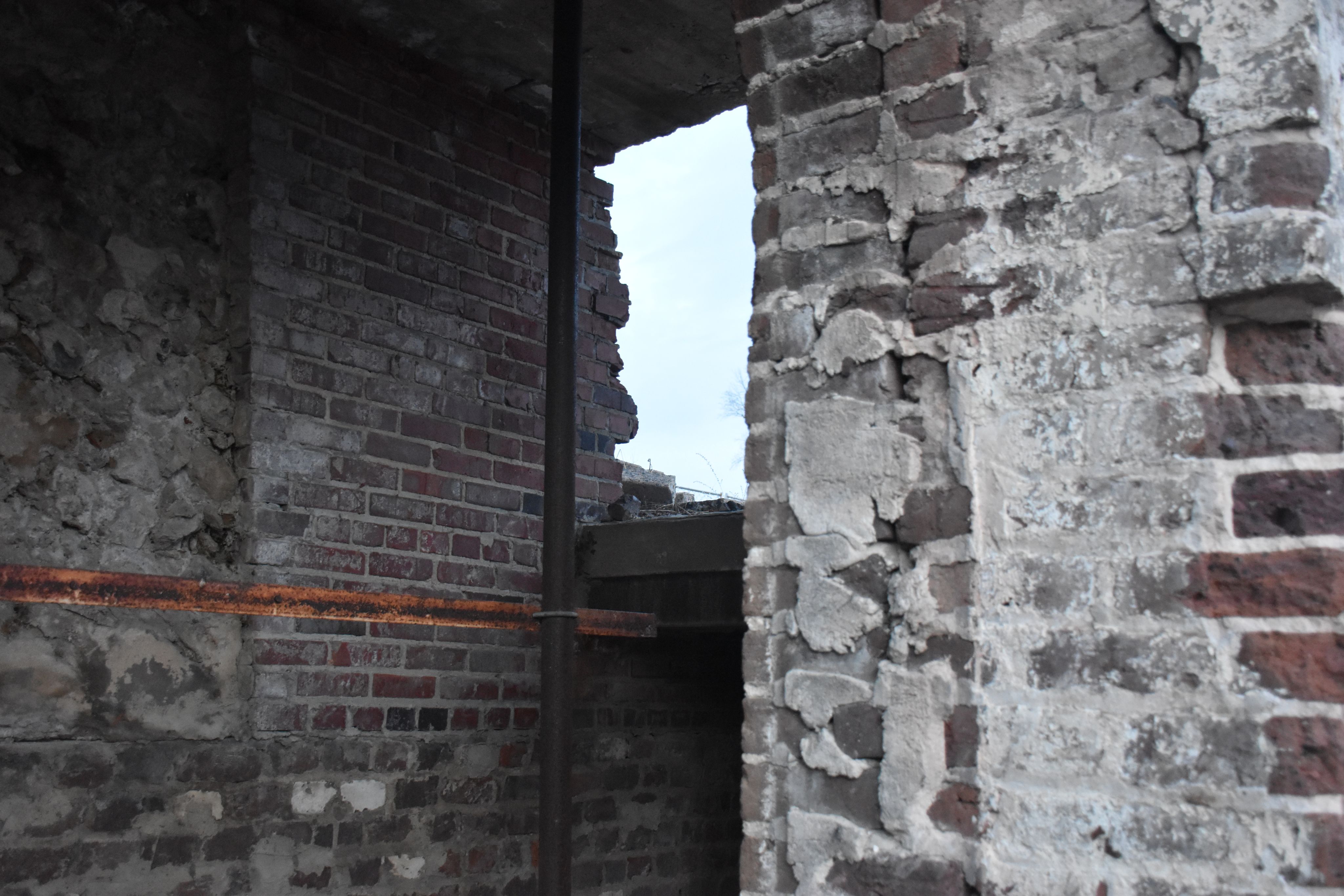
“If you walked down the railroad you would see it’s littered with skeletons of dead mills,” said John Guss, a historian and key player in the preservation of the region’s history.
The abandoned mills remain as an epitaph to a Burlington buried under industrialization, urbanization and the North American Free Trade Agreement. NAFTA eliminated trade barriers between the U.S., Canada, and Mexico, making it cheaper for American companies to move manufacturing south, and taking many factory jobs with it.
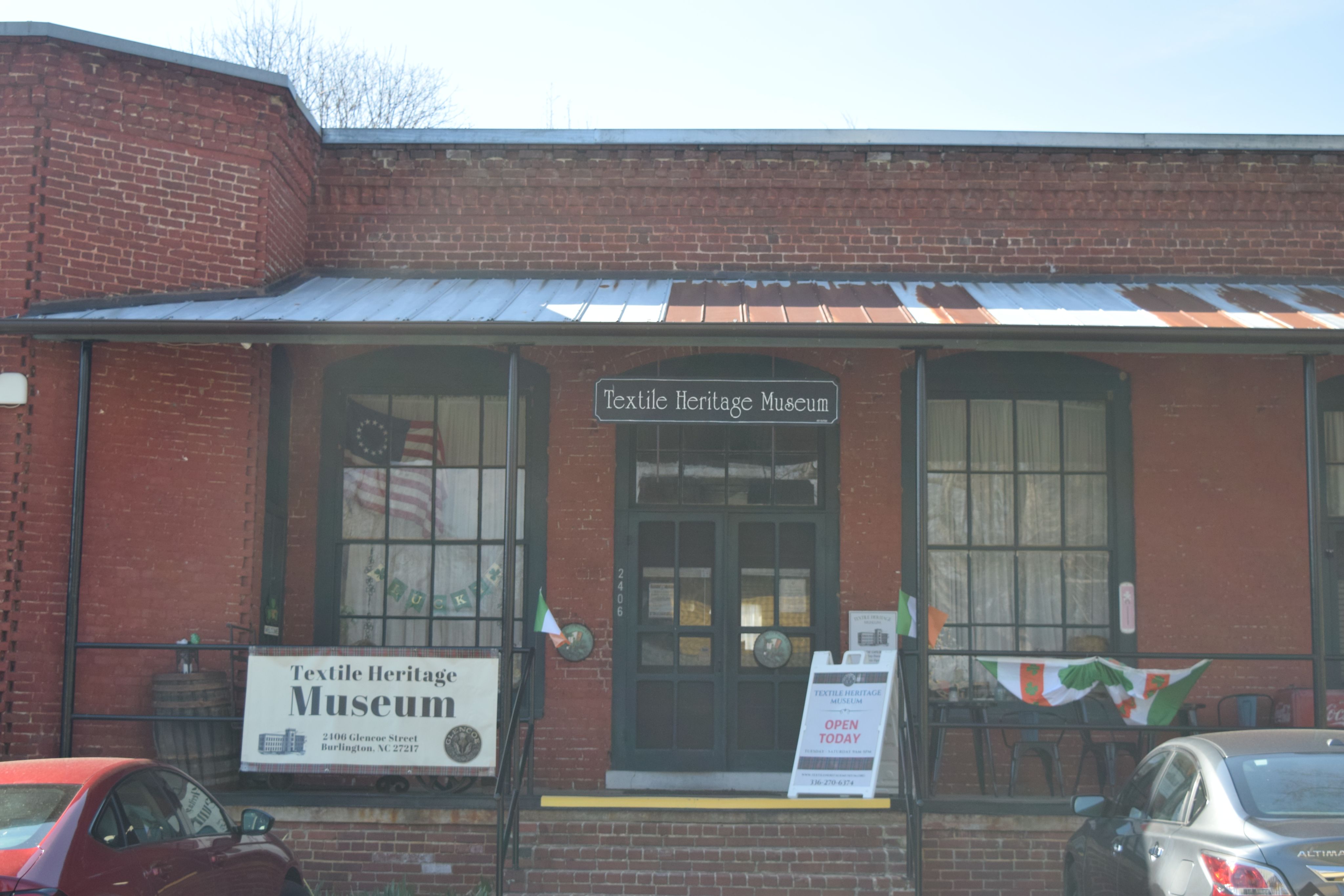
Much of that history has been preserved in the Textile Heritage Museum and continues to be told by John Guss, an architect in the preservation and development of the museum. The mill and homes that sat as a ghost town is now a small part of the tourism industry.
“The village has now really become a tourist destination for North Carolinians,” said Guss. “And as mentioned, tourism is a huge industry in North Carolina. It's become one of the top three industries here in the state, generating billions of dollars every year. It's all because of preserving our history.”
While North Carolina's beaches and mountains are much larger draws for tourists, the museum does bring in school buses full of students learning North Carolinian history. The museum stands as symbol of that history.
“You can't move forward unless you know where you came from,” said Guss. “And it's very important to keep our history. It's the foundation and we learn a lot from keeping these things around.”
The loss of the textile industry can largely be blamed on NAFTA, globalization and automation. But, the decline of textiles and manufacturing is only one reason among many for the unraveling of a once close knit community.
“There were big changes in the 20th century of how people lived and shopped and interacted,” Kirk said. “So, it's not just the decline of the textile industry, it's changing consumer behaviors.”
Many of those changing consumer behaviors can be attributed to the rise of the shopping mall such as Alamance Crossing and Holly Hill Mall and to a changing society.
Huffstettler remembers the Burlington of his childhood as picturesque. It was a town where everyone knew everyone, in essence a slice of the American pie. And for some it was certainly that, but many of those closely tied communities within Burlington existed separately from each other.
“This was the Jim Crow era,” Kirk said. “There were patterns of segregation involved. There are very strong socio-economic divisions between the wealthy and managerial class. Very different pay scales depending on what industry or what type of textile company you're working for. Burlington has long been stratified in many ways in the downtown area. So you lose that shopping core, and it just leads to more fragmentation.”
Burlington has remained resilient through history since its establishment in 1854 as “Company Shops.” Much has changed since that time, with sprawling strip malls and surging population, however, racial lines remain the same.
During Jim Crow there was a completely separate downtown known as "Black Bottom" that held thriving black-owned businesses.
"Black Bottom" was located in east Burlington where much of the Black population and Latino population still reside today.
“If you look at where people live in Burlington based on demographics,” said Kirk. “It matches trends that were there 70 years ago.”
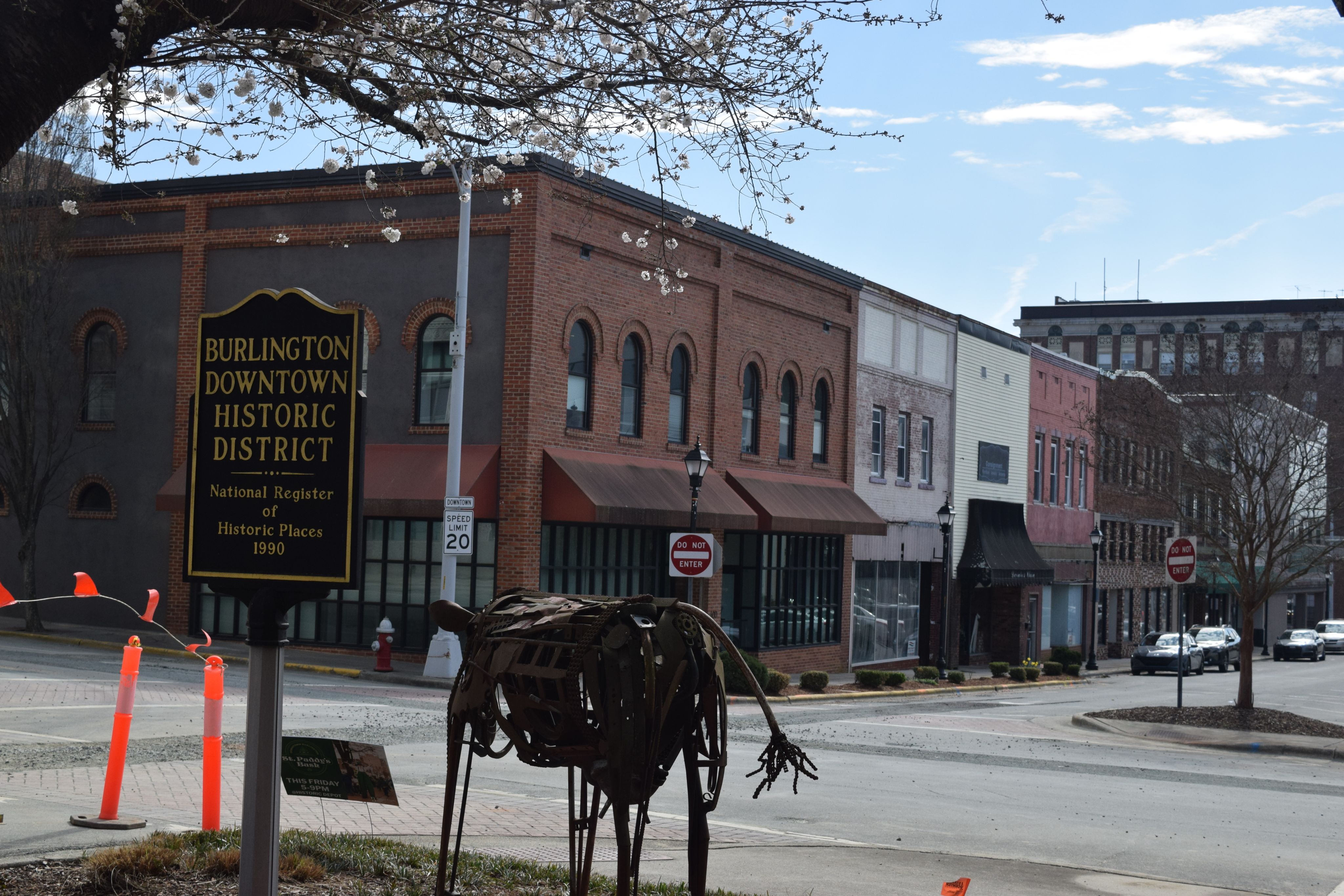
Nowadays, Burlington is working to create lasting community ties, welcoming businesses and hosting events in the downtown center. A part of this process is through the economic development department. Interested businesses are able to reach out and have conversations about things like zoning and space.
Funding is the main necessity in plans to rebuild a community in Burlington. According to Adam Shull, the economic development director, part of this funding comes from people in downtown otherwise known as the municipal service district.
“Folks pay a small property tax that creates a pot of money,” Shull said. “We call it the MSD money that goes back to supporting downtown in any programming it may have, that funds our downtown manager's job, marketing, advertising, event programming. It creates a bucket of money to specifically support downtown.”
Though this bucket is not substantial it partially goes to events hosted downtown like Fourth-Friday concerts, St. Paddy’s Day Bash, Burlington Carousel Festival and Social District Sip’n’Shop. Small businesses also fill a space. Boutique shops and restaurants draw people in. One such business is Burlington Beer Works.

Credit: Cassie Weymouth
Credit: Cassie Weymouth
Credit: Cassie Weymouth
Credit: Cassie Weymouth
Credit: Cassie Weymouth
Credit: Cassie Weymouth
Credit: Cassie Weymouth
Credit: Cassie Weymouth
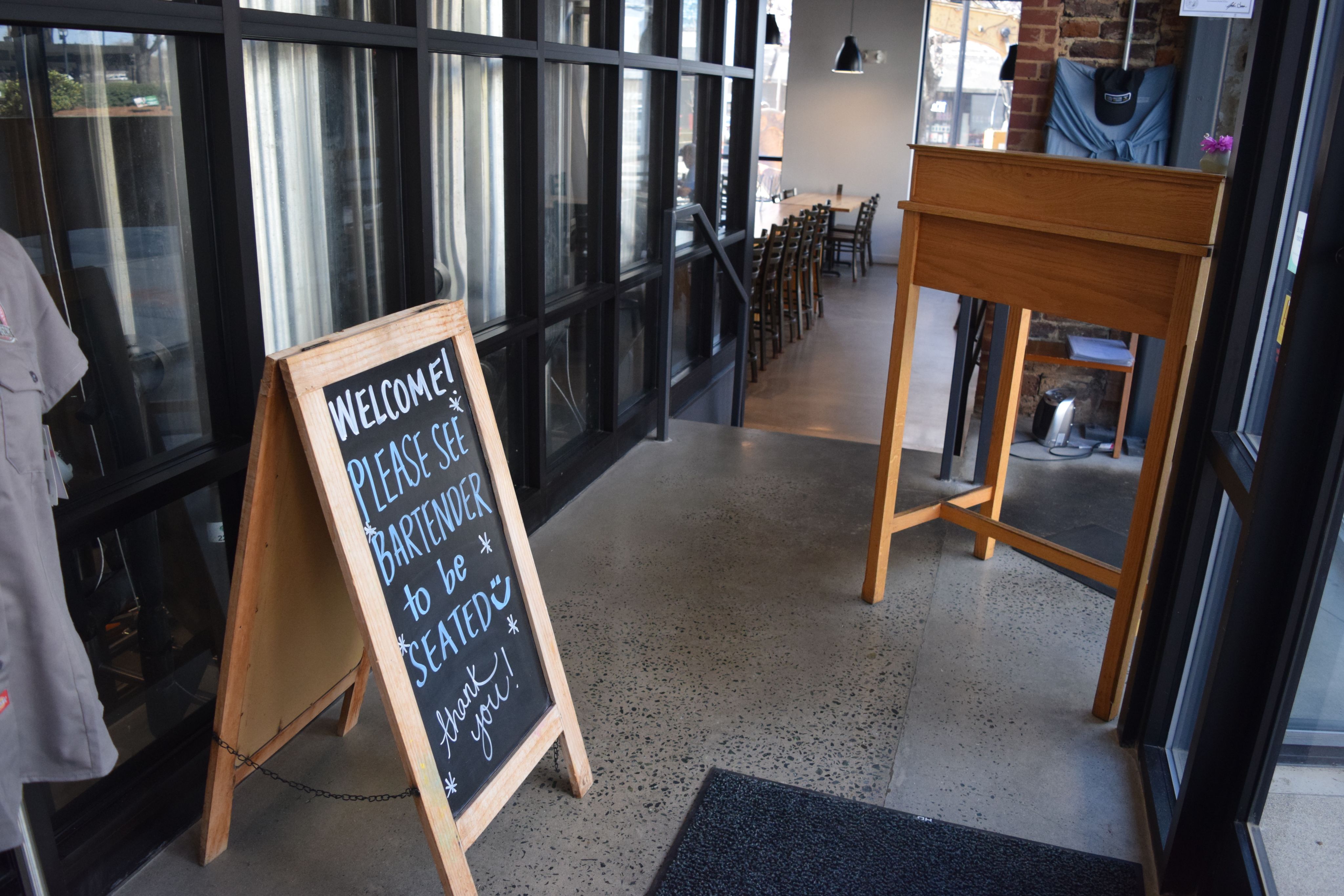
Burlington Beer Works is a co-op owned business that officially opened in 2019 though it was an idea in the works five years prior to that. Owned by the community, the brewery restaurant was thought up with the intention of bringing life back to the downtown. The official opening happened almost exactly a year before COVID hit, and Tracy Schmidt, the general manager, credits their survival to that same community. A community that kept Burlington Beer Works afloat and still believes that there’s still some life in downtown.
“Burlington Beer Works is located downtown, because that was the idea behind it,” said Tracy Schimdt, the general manager. “To spark revitalization in an area that hadn't seen any growth over several decades.”
The groundwork for Burlington Beer Works had already started, when the decision to transform from just a brewery to a full blown farm-to-table restaurant was made. Perhaps because of this decision, the brewery’s customer base is, well, pretty much anyone who shows up.
“I mean, we hold four year old birthday parties here,” Schmidt said. “It's really fun to walk upstairs and see my servers running around balloon fighting kids at a birthday party, and then we'll turn around and celebrate 80th birthday parties as well.”
Burlington Beer Works is what spurred Schmidt to open Tanner’s Wine Bar in 2021. Originally meant to be a cocktail and dessert place for people waiting for their table at Beer Works.
“Whenever we would go on a wait at Beer Works, people would leave downtown,” Schmidt said. “And so what can I do? And so I decided to open Tanner's.”
Schmidt credits her chef for transforming Tanner’s from a wine bar into a full blown tapas style restaurant. The tapas place is named in honor of the man and his family who invested in seeing it built. He died before seeing what the space would become.
Schmidt grew up in the town of Burlington and spoke about seeing the struggle to bring the downtown back. She is far from naive when looking at an effort that started in the '60s and has continued to struggle in 2026.
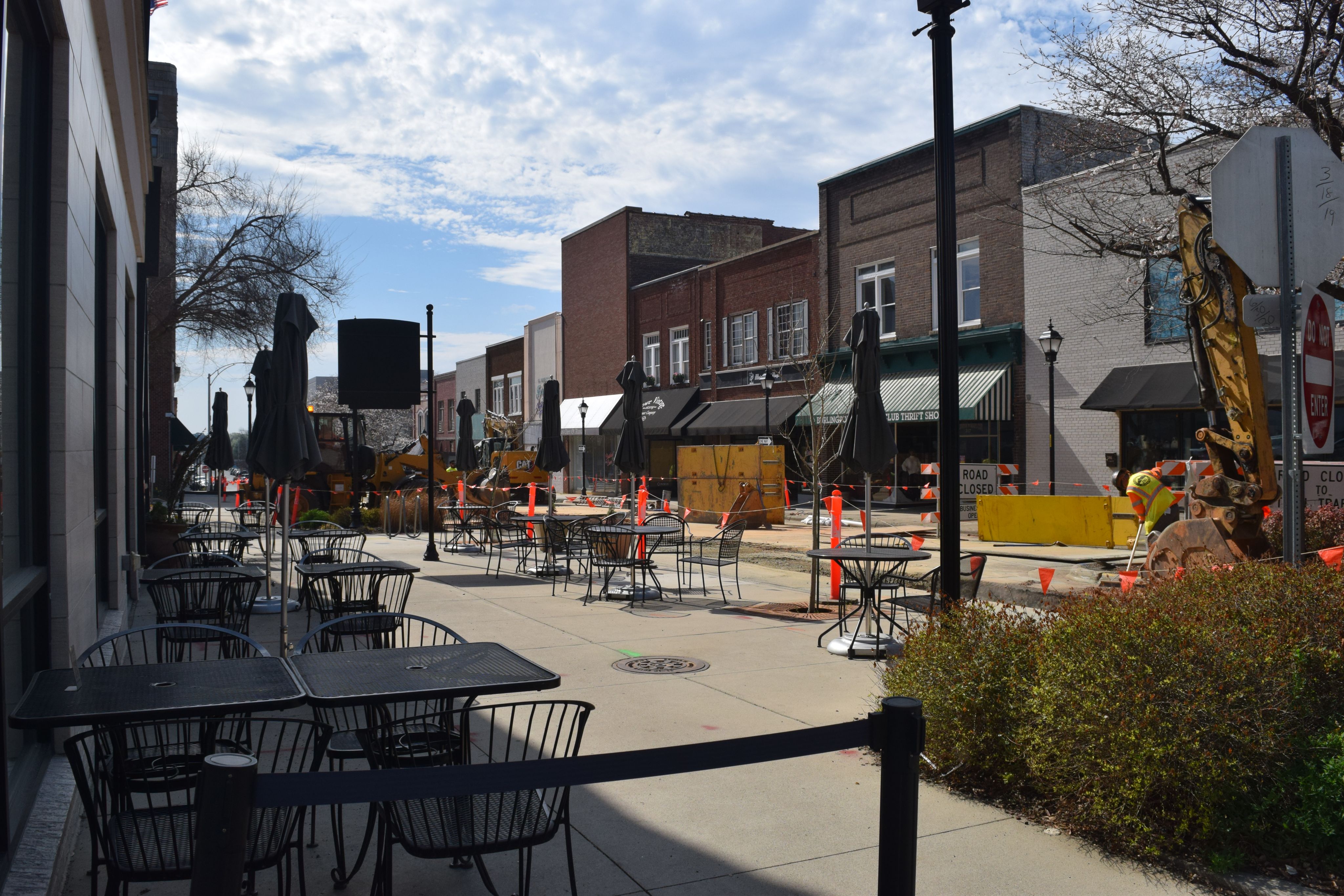
“I do have hope for it,” Schmidt said. “But just because water and sewer lines are getting fixed down here, just because the streets are going to be repaved, just because the Paramount is being reopened, doesn’t mean it will be fixed it's going to be a lot of hard work.”
It’s been a hard road for downtown Burlington business owners. Foot traffic is still not regular and while the construction is greatly needed, it is expected to continue for months, closing off roads and creating excessive dust. Downtown is no longer the heart of Burlington and there hasn’t been one for a long time. It will take a lot for downtown to regain its former vitality and it will be through people like Schmidt.
“I've invested my entire life savings to open Tanner's across the street when I know that there are other downtown communities that are already very far ahead of us, that it would be easier,” Schmidt said. “But my heart is here at Beer Works with the community that I've been a part of and that we're continuing to build, that's why the struggle is worth it.”

"It's going to be a lot of hardwork."
Special Thanks To
Textile Heritage Museum for archival photos
 Built with Shorthand