
Local healthcare clinic provides lifeline to uninsured
Open Door Clinic offers free healthcare, open in-person 3 days a week

Alamance County resident Valerie Epperson said she doesn’t think she would be alive right now if it were not for the Open Door Clinic of Alamance County, a clinic that provides free healthcare to people who do not have insurance.
“When I first started, my diabetes were out of control, and I was just eating anything I wanted. It’s like, I just didn't care,” Epperson said. “When you have someone there to help you, it keeps your mind open all the time about, ‘Hey, you need to do this. You need to stop doing this.’”
Before attending the clinic, Epperson was struggling with diabetes, panic attacks and depression. She had Medicaid for a time, but when her two children turned 18, they, along with her, lost access to Medicaid. Epperson, who is now 61 years old, went a few years without insurance and was unable to see a doctor. She had to go off her medication for panic attacks because she was off Medicaid.

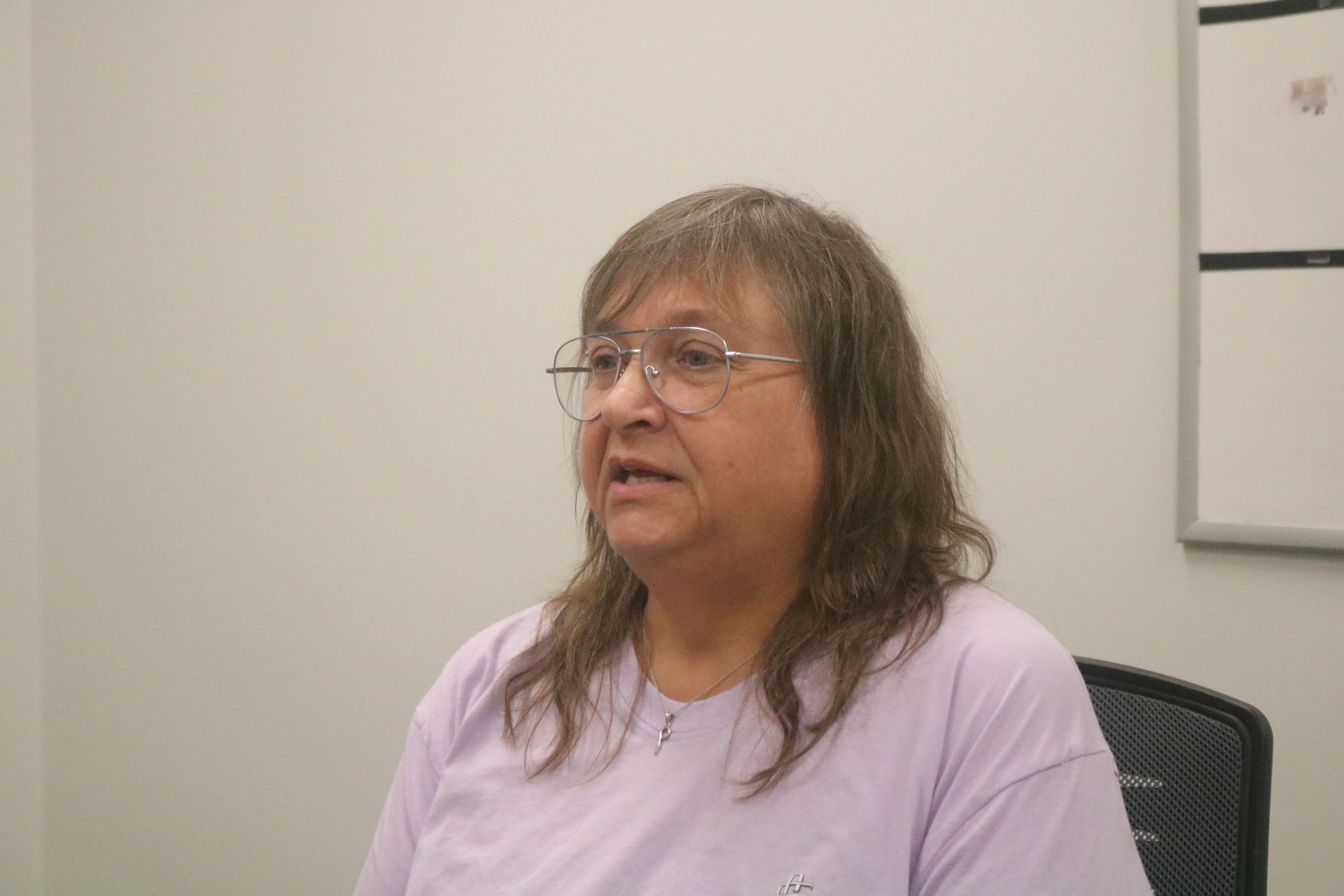
Alamance County resident Valerie Epperson has been a client of the Open Door Clinic for almost seven years.
Alamance County resident Valerie Epperson has been a client of the Open Door Clinic for almost seven years.
“I'd done pretty good for the first year, and then it just started creeping back up on me, my having the panic attacks and depression, and it got to where I couldn't even hardly get in my car and drive because I felt like I was going to just panic, and so I knew then that I needed to get out and go try to do something,” Epperson said.
Epperson looked around and found the Open Door Clinic and has been going there for about seven years. Epperson regularly goes to Open Door, seeing the primary care doctor two to three times a month, the endocrinologist every three months and the ophthalmologist once a year.
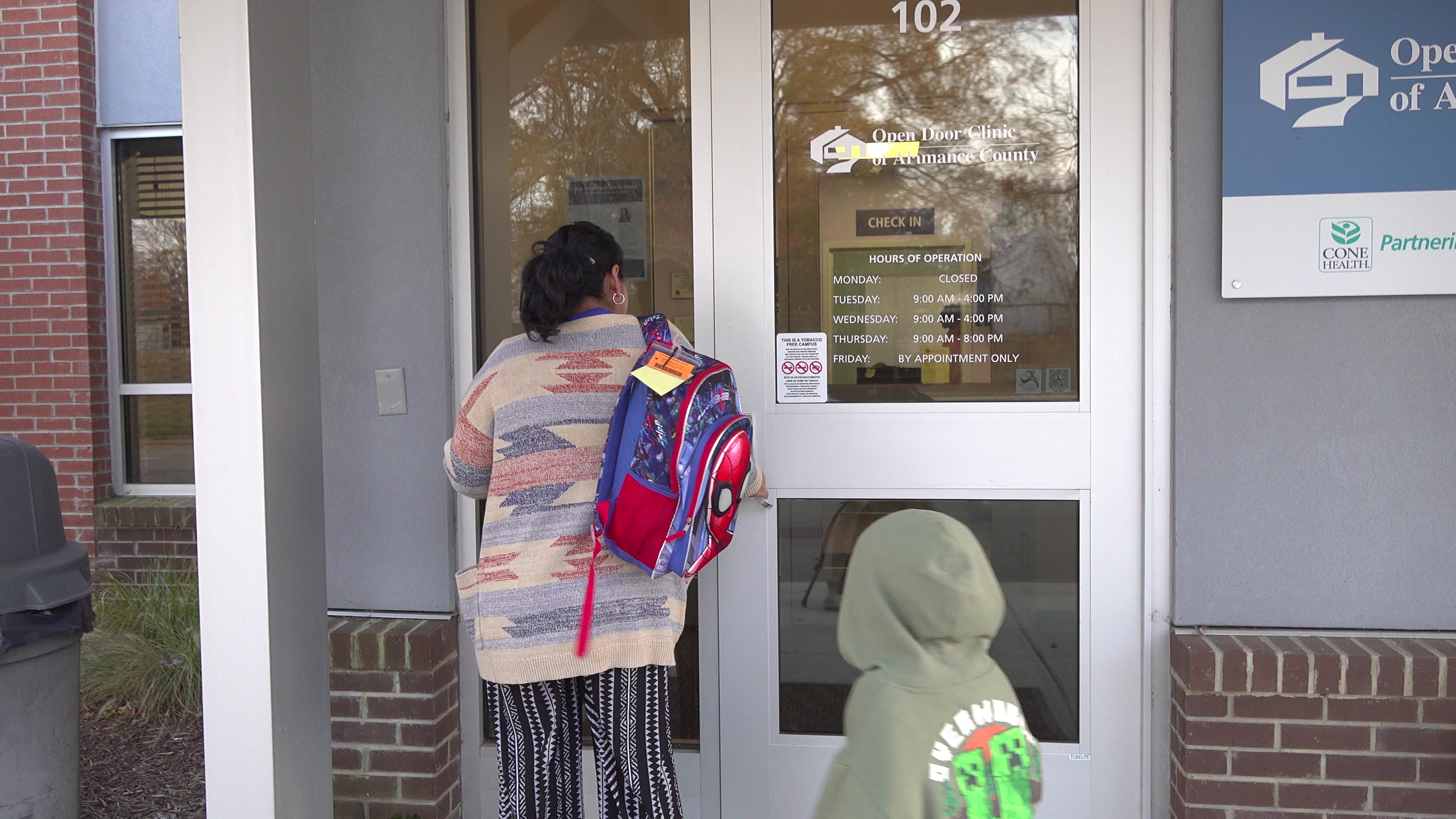

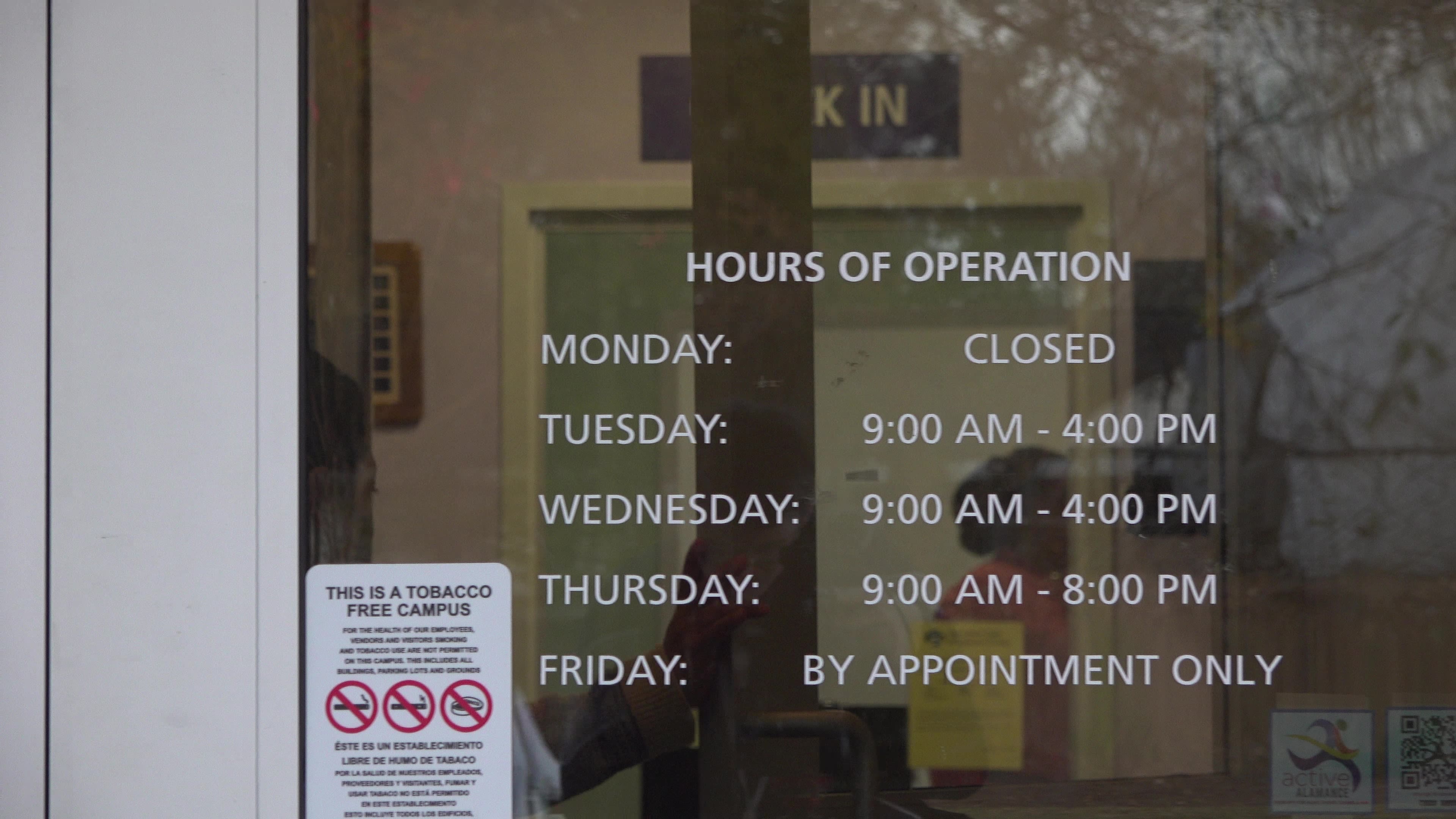
The Open Door Clinic is located at 424 Rudd Street in Burlington and is open for in-person care on Tuesday, Thursday, Friday and on Wednesday for virtual appointments.
The Open Door Clinic is located at 424 Rudd Street in Burlington and is open for in-person care on Tuesday, Thursday, Friday and on Wednesday for virtual appointments.
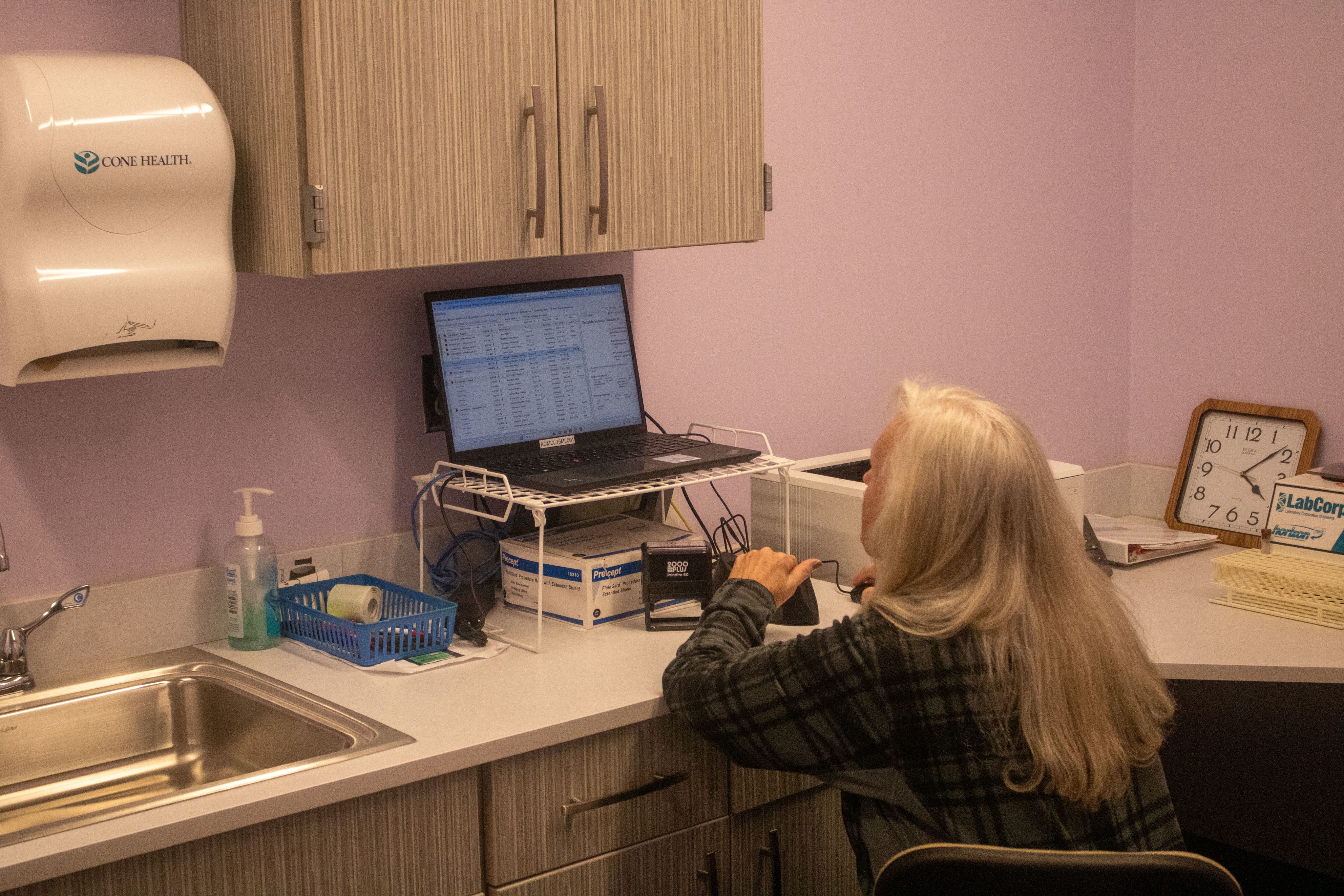
Phlebotomist Laura Hale works in one of the clinic's labs on Nov. 20.
Phlebotomist Laura Hale works in one of the clinic's labs on Nov. 20.
The clinic was established in 1990 after a group of physicians recognized that healthcare was needed for the uninsured. According to one of the clinic’s phlebotomists, Laura Hale, this need was discovered because of an influx of uninsured patients in the emergency room at Alamance Memorial Hospital in the 1980s.
She said the hospital only had four exam rooms and patients without health insurance often showed up whenever they needed help with anything. So, physicians decided to create a place solely for those people.
Hale, who started working at the clinic in its second year, said it began entirely with volunteers. She said students from Elon University often helped out with the intake of patients. The clinic is now funded mostly by grants and donations.
The clinic is located at 424 Rudd Street in Burlington and is open for in-person care on Tuesdays, Thursdays, Fridays and on Wednesdays for virtual appointments. The clinic’s services include primary care, endocrinology for diabetics, eye care, dental care and a social worker for mental health care. The clinic also partners with Cone Health to offer virtual primary care and gets free lab work from Labcorp.
Eligible patients are residents of Alamance County without insurance. Open Door Clinic Board of Directors Chair George Kernodle said that the clinic doesn’t see children or the elderly, but mostly focuses on the “working poor.” This includes people whose jobs don't have insurance or those with mental health problems that prevent them from working.
According to Janay Powell, the clinic’s executive director, the clinic serves about 80-100 patients per month and has about 400 total patients. Powell said it's important to have clinics like this open for those who need it.

“There's a high need,” Powell said. “Not everyone can afford health care, and that's not fair. “Everybody deserves to be healthy and happy and be safe in the environment. I feel like this space is a safe space for our patients in the community.”
The healthcare crisis extends beyond just the borders of Alamance County. According to a 2024 Commonwealth Fund study, 9% of working-age adults are uninsured and almost a quarter of adults have insurance that leaves them underinsured. Almost half of U.S. adults say that it is difficult to afford health care costs, according to a KFF health poll. KFF polling also shows that one in five adults has not filled a prescription because of the cost.
The cost of prescriptions is something Epperson struggled with as she wasn’t able to get certain medication before coming to the clinic. Now the clinic can write prescriptions for her, and her life has vastly improved, she said.
“Now, my diabetes is under control. I've changed my whole way of eating now because of this place, and I'm going to the gym now every day and walking, and I've probably lost 60 pounds,” Epperson said. “It has really, really been a blessing for me.”
Hale said that without the Open Door Clinic, people would fall through the cracks of the healthcare system.
“If we can’t help them, they’re at a loss if they get sick, and the more they get sick, the costlier it is for all of us because then they show up at the hospital, and then the hospital has to write the cost off of whatever they do to treat them,” Hale said.
Epperson said free clinics like Open Door are important because they provide more than the emergency room can offer. She said it's important to be able to get a prescription for medication and get one-on-one care from a doctor or a nurse.
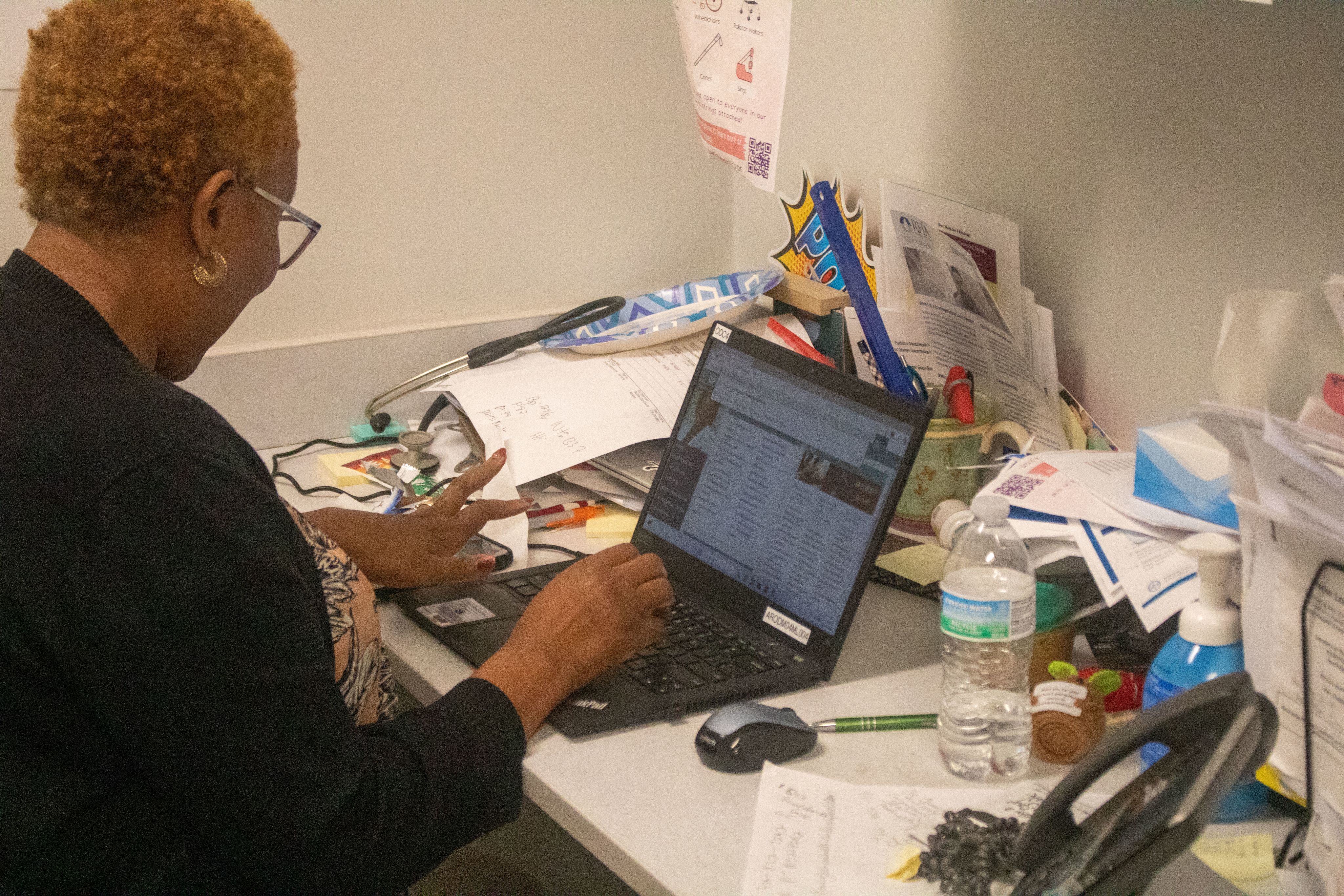
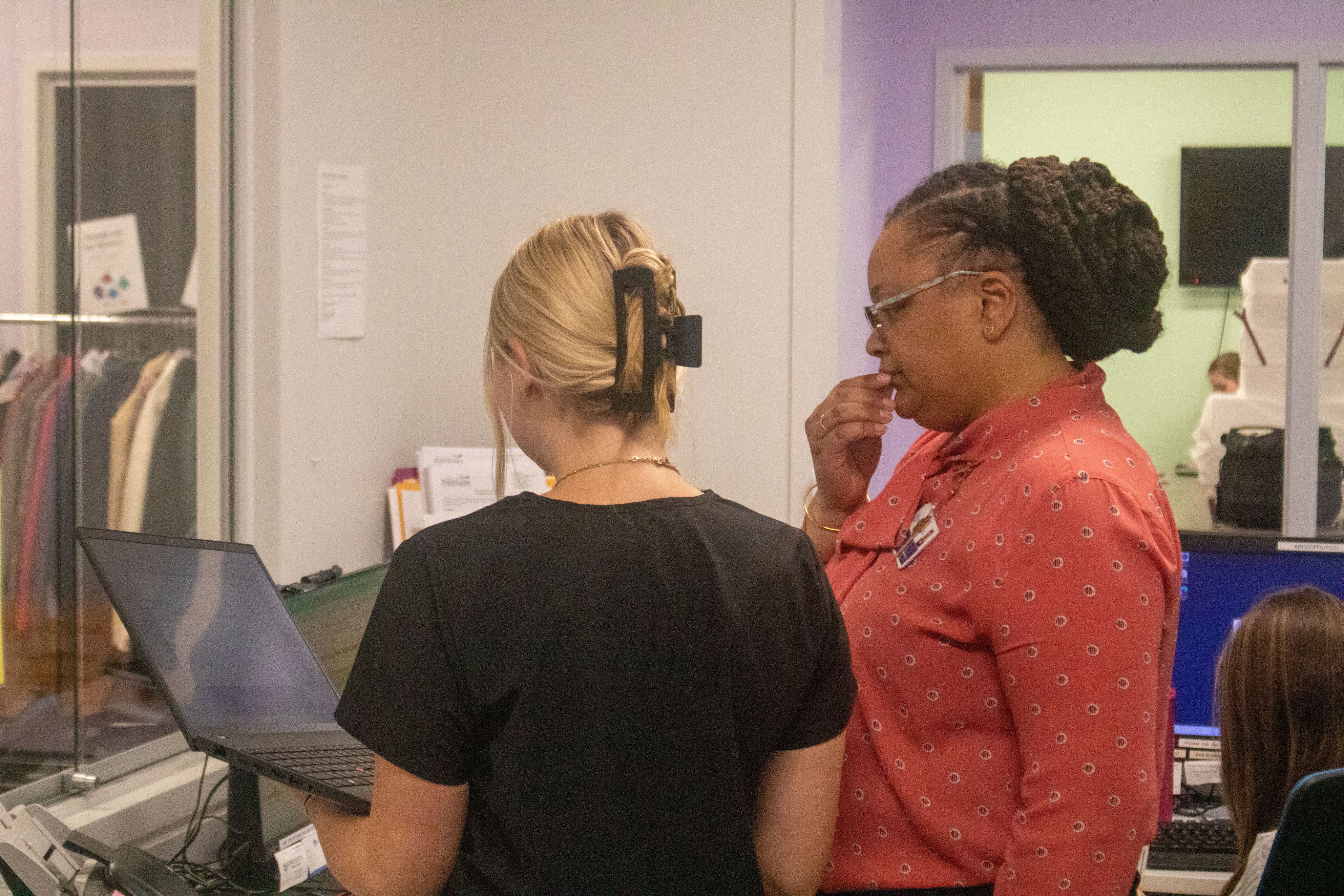
Nurse practitioner Chioma “Elizabeth” Iloabachie works in her office in the Open Door Clinic on Nov. 20.
Nurse practitioner Chioma “Elizabeth” Iloabachie works in her office in the Open Door Clinic on Nov. 20.

The clinic’s role in the community has become increasingly important in a turbulent time for healthcare in North Carolina and nationwide. The extension of Obamacare subsidies that help people pay for coverage were the center of the recent government shutdown, which was the largest shutdown ever. Additionally, North Carolina has seen Medicaid cuts as a result of the state budget impasse.
Kernodle said the clinic lost a lot of its patients when North Carolina expanded Medicaid in 2023, but a lot of these patients could now return to the clinic as a result of the cuts. Powell said the clinic is ready for these new patients if the need arises.
“With the funding cuts that are going on right now, unfortunately, a lot of people in our community are going to lose Medicaid coverage, but fortunately, we are here for them so they can just come to see us,” Powell said.
"What if that was your brother and they couldn't afford their diabetes medications, and then you're looking at them in a coffin. We have to really consider that and put patients first."
Powell said federal and state legislators need to understand the impact of rising insurance costs.
“It's not helpful to our community,” Powell said. “I think that you need to consider that and consider what if that was your mom? What if that was your sister? What if that was your brother and they couldn't afford their diabetes medications, and then you're looking at them in a coffin. We have to really consider that and put patients first.”
As more Americans struggle to afford healthcare costs, Kernodle said that it's important for Alamance County residents to be aware of the Open Door Clinic. He said they can be unaware of the clinic because of a lack of advertising but he wants residents to know that the clinic is there for them.
“I would like for the community to know that there is an option for people, because a lot of families will have someone in their network who is going to be uninsured at some time, and they don't always know where to go,” Kernodle said. “You don't have to be desperate. We're here for them.”
 Built with Shorthand