
"I keep fighting": Durham Rising's fight for worker's rights
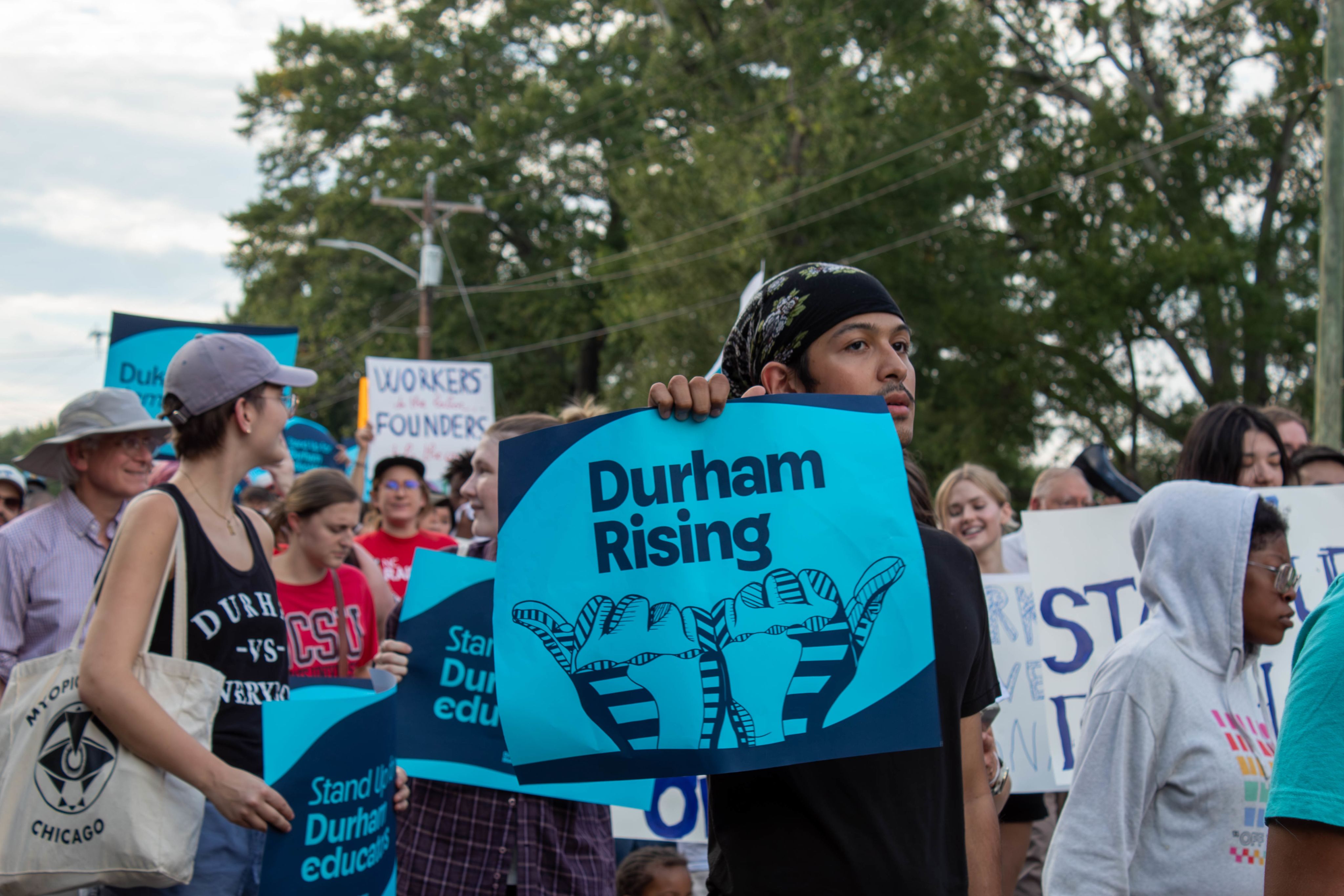

Laura Dixon has worked at Duke University for 15 years. She works as a bio-waste handler and currently gets paid $18.37 an hour, something that she and other members of Durham Rising are trying to fix.
“Not too long I got raised up from when I was making $18.09,” Dixon said. “The raise is literally 28 cents more. I feel like it's a slap in the face. We can’t even live like that in Durham, especially in Durham.”
Durham Rising, which was established in May, is a coalition of different unions, organizations and workers from across the city and county of Durham. This includes organizations such as Durham Association of Educators, Siembra NC, Durham For All, Unions For All, SEIU Ninety-Nine and North Carolina Council of Churches, unions such as Union of Southern Service Workers, Duke Graduate Students Union, UE150 NC Public Service Workers Union, and workers across Duke University and Duke Health.
Dixon is a member of the USSW, a union for service workers based in the Southern United States.
The coalition’s ultimate goal is to have Duke University invest money into resources for Durham. Duke, which is currently ranked 7th in national universities by the U.S. News and World Report, has an endowment of roughly $12.3 billion. In addition to its endowment, Duke is the largest employer in the county.

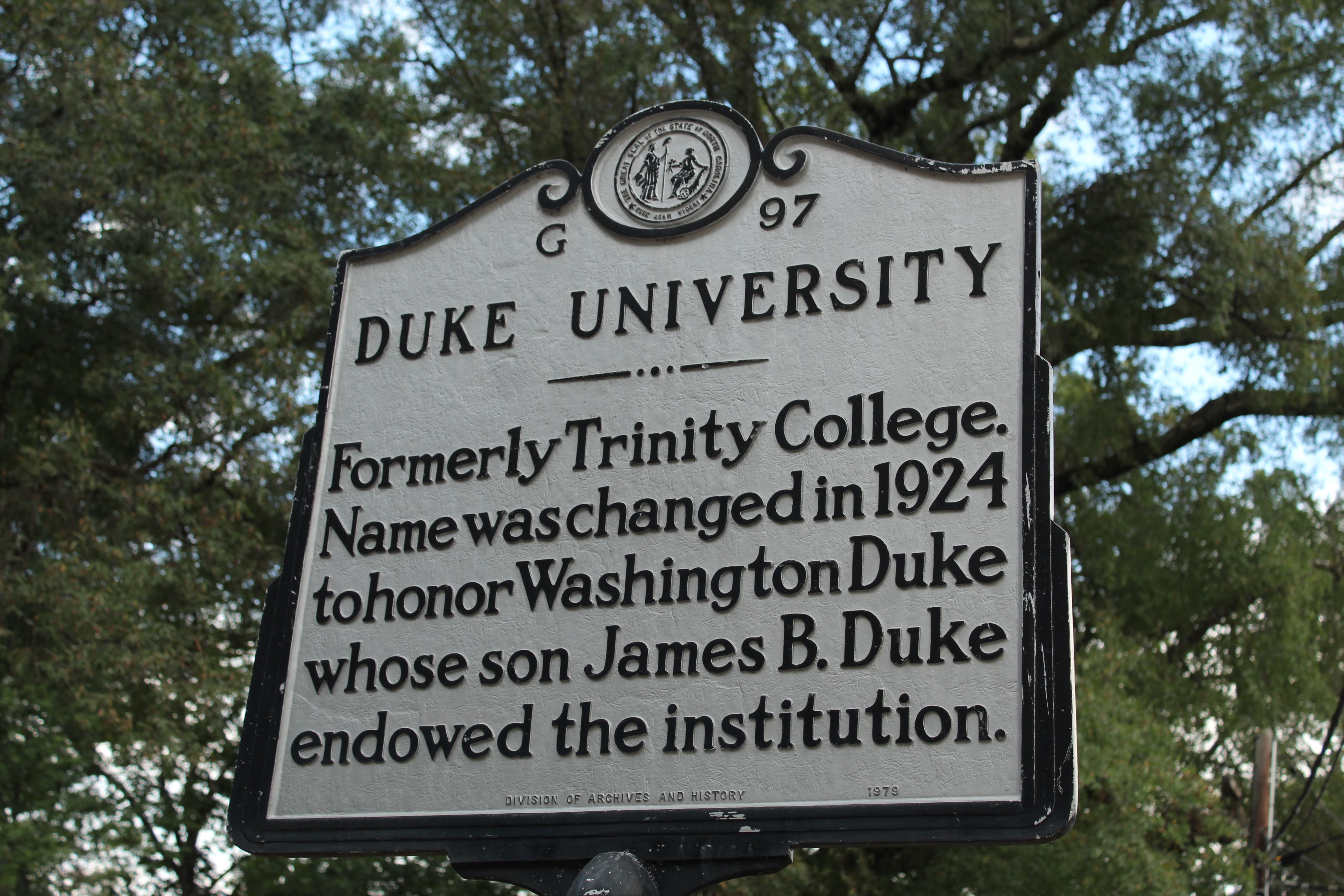
Duke University on Sept. 25. Duke University is the largest employer in Durham County and the second largest private employer in the state of North Carolina. Photo by Nia Bedard
Duke University on Sept. 25. Duke University is the largest employer in Durham County and the second largest private employer in the state of North Carolina. Photo by Nia Bedard
“They should be doing more for the people of Durham,” Dixon said. “We have like generations over generations that's been working. We do that.”
In the 2024 fiscal year, 77.08% of the county's income was from taxes, however the county still went over budget by roughly $123 million.
Since the 2024 fiscal year, Durham County has experienced a loss of $1.22 million dollars in sales tax revenue. Durham’s sales tax rate has remained consistent at 2.25%, meaning that for every $100 dollars spent, $2.25 will be added to the total which goes back to the governing jurisdiction.
Durham County also decreased its property tax rate for the 2026 fiscal year from a 7.98% tax rate to a 5.54% rate, meaning that Durham County is taking in less money from property owners.
Despite contributing employment opportunities throughout the city, Duke is a tax-exempt nonprofit as a private university. Due to the university’s tax-exempt status, the university does not have to pay taxes on any land that is used for non-commercial purposes.
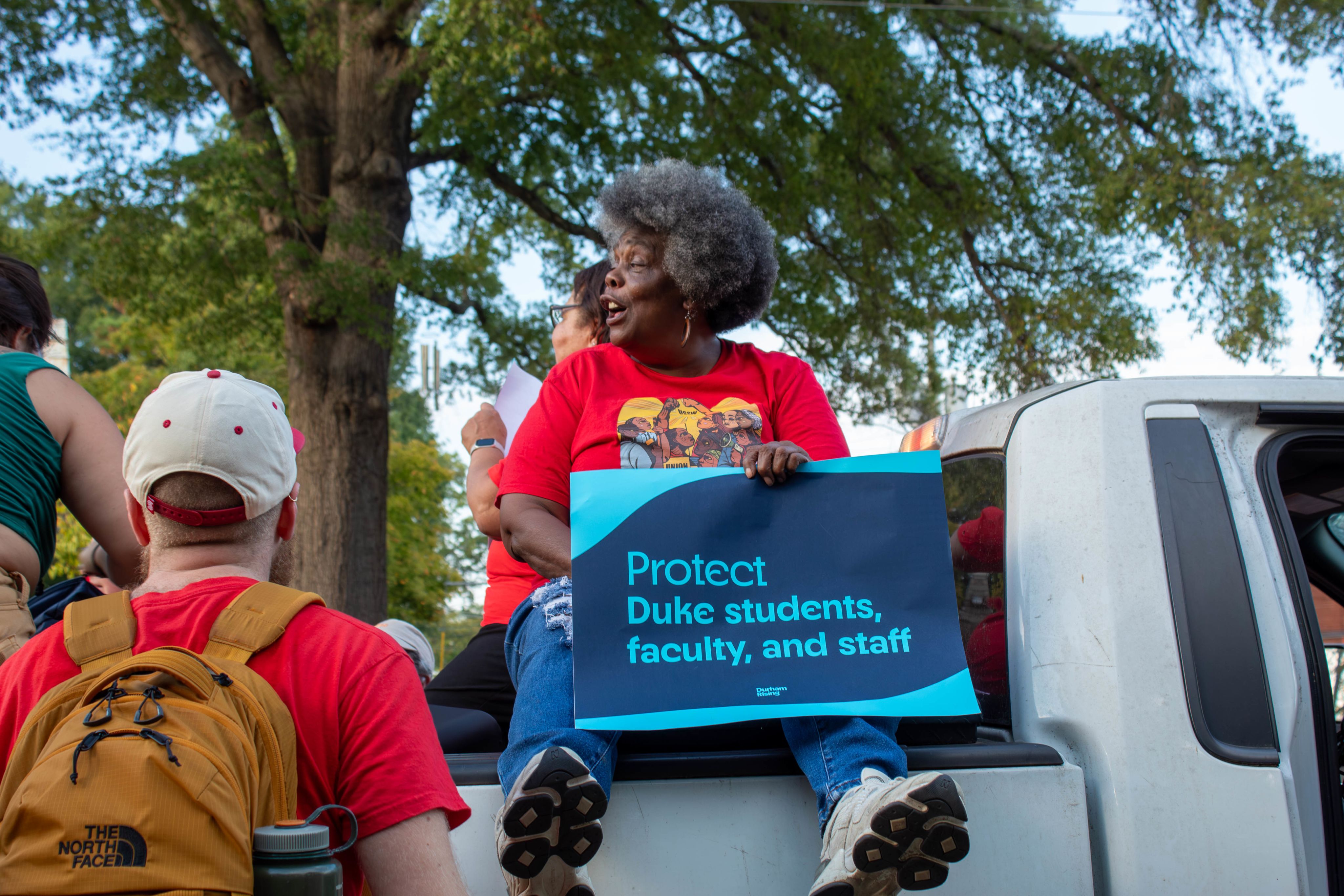
Durham Rising is currently demanding that Duke must pay its employees $25 an hour, invest in county public schools, build adequate affordable housing, contribute city services and wages of city workers, and protect students, faculty, workers, programs and services from federal funding cuts, threats to freedom of speech and deportation threats.

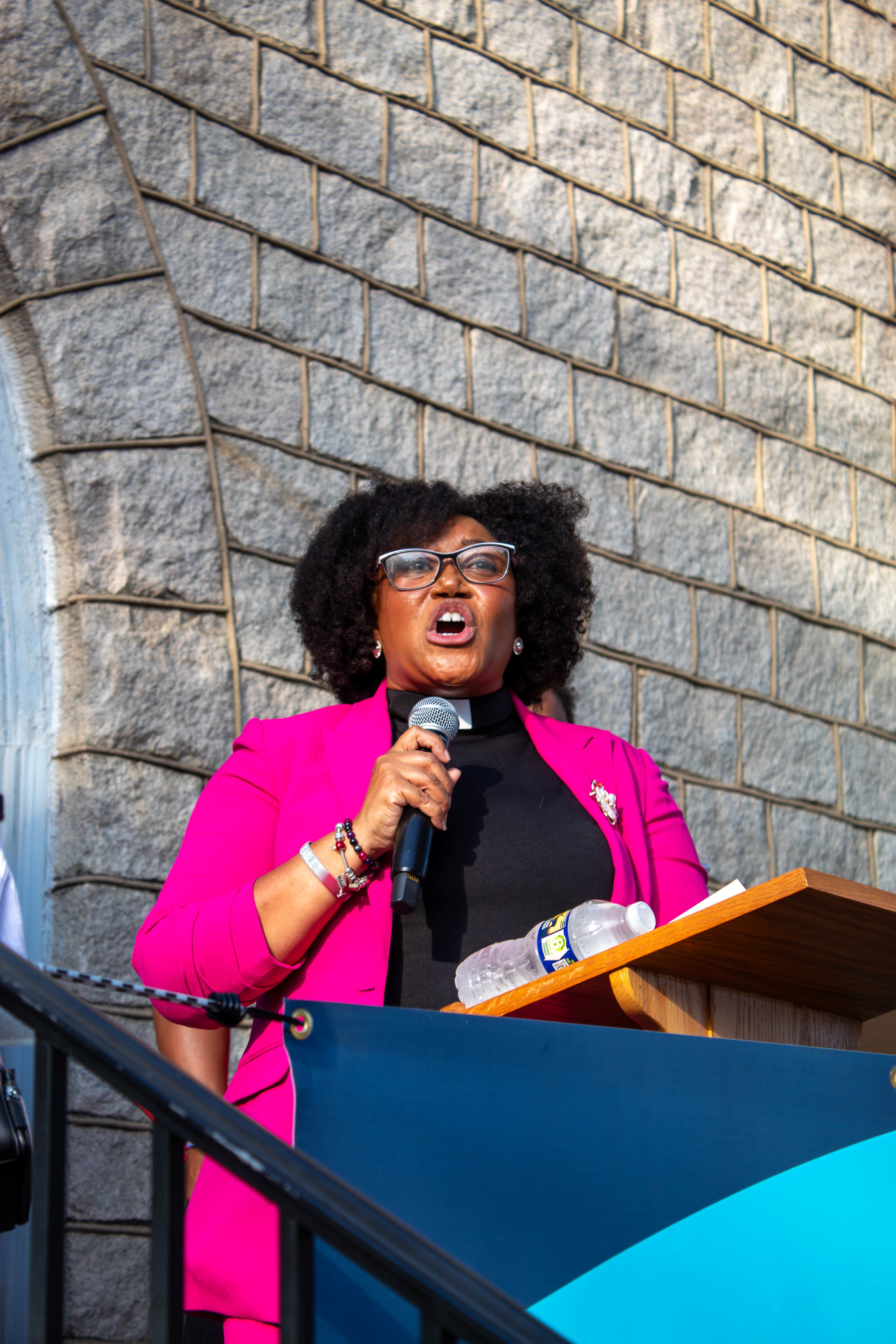
Rev. Valerie J. Mayo stands in front of St. Joesph's Episcopal Church during Durham Rising's Founder's Day march. Photo by Nia Bedard
Rev. Valerie J. Mayo stands in front of St. Joesph's Episcopal Church during Durham Rising's Founder's Day march. Photo by Nia Bedard

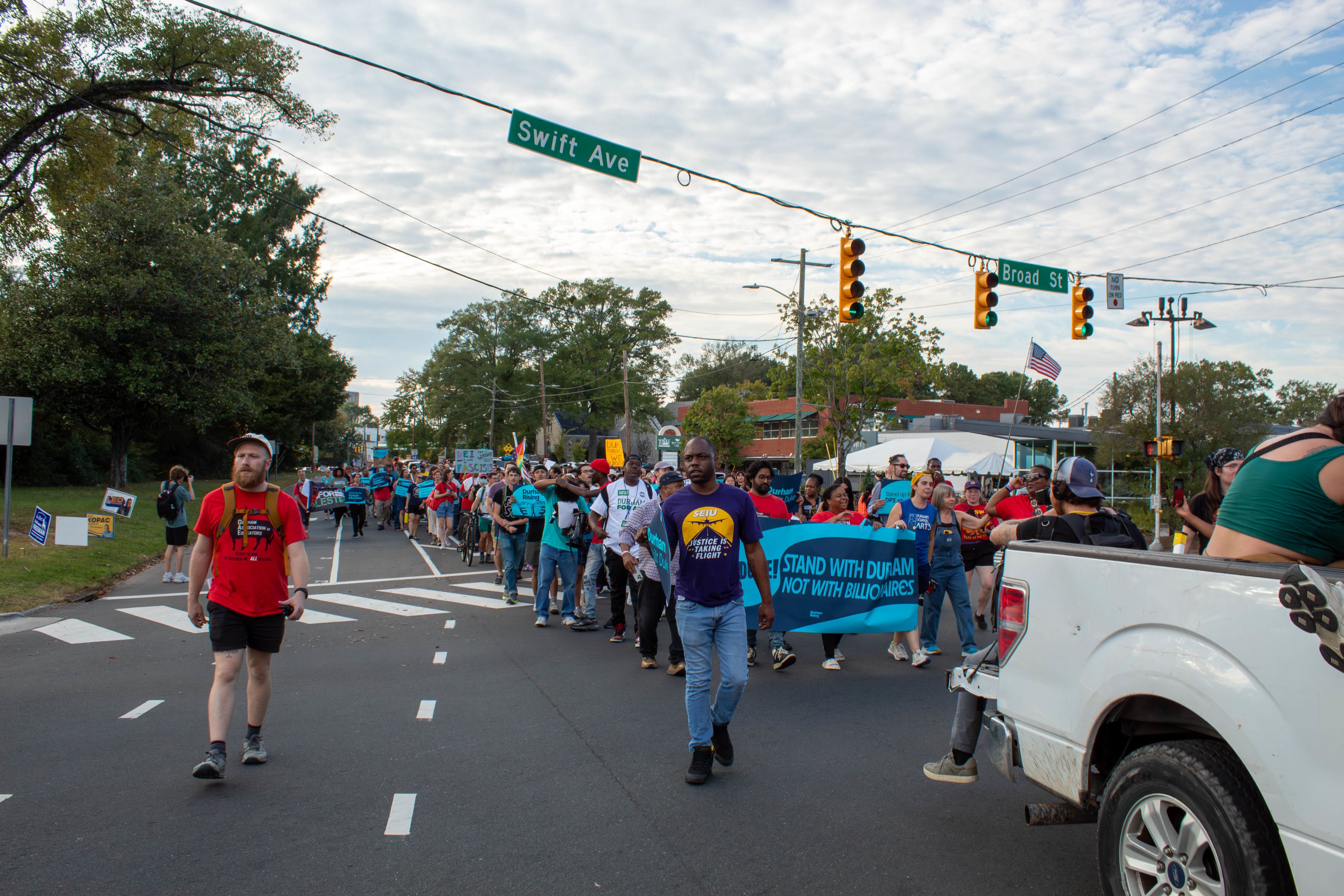
Members of Durham Rising walk down Broad Street towards Duke University. Photo by Nia Bedard.
Members of Durham Rising walk down Broad Street towards Duke University. Photo by Nia Bedard.
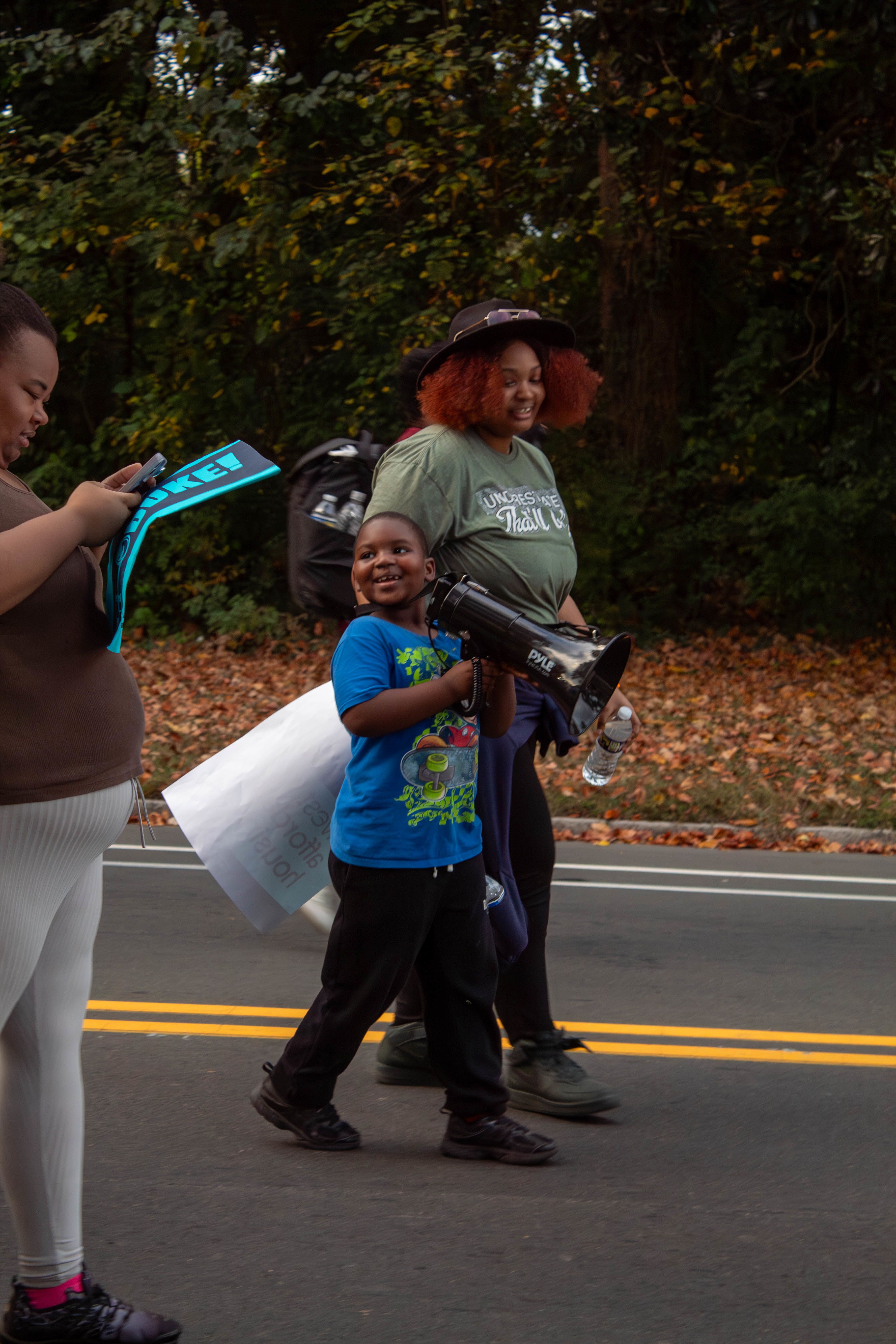
A child holds a megaphone walking down Broad Street during Durham Rising's Founder's Day march. Photo by Nia Bedard
A child holds a megaphone walking down Broad Street during Durham Rising's Founder's Day march. Photo by Nia Bedard
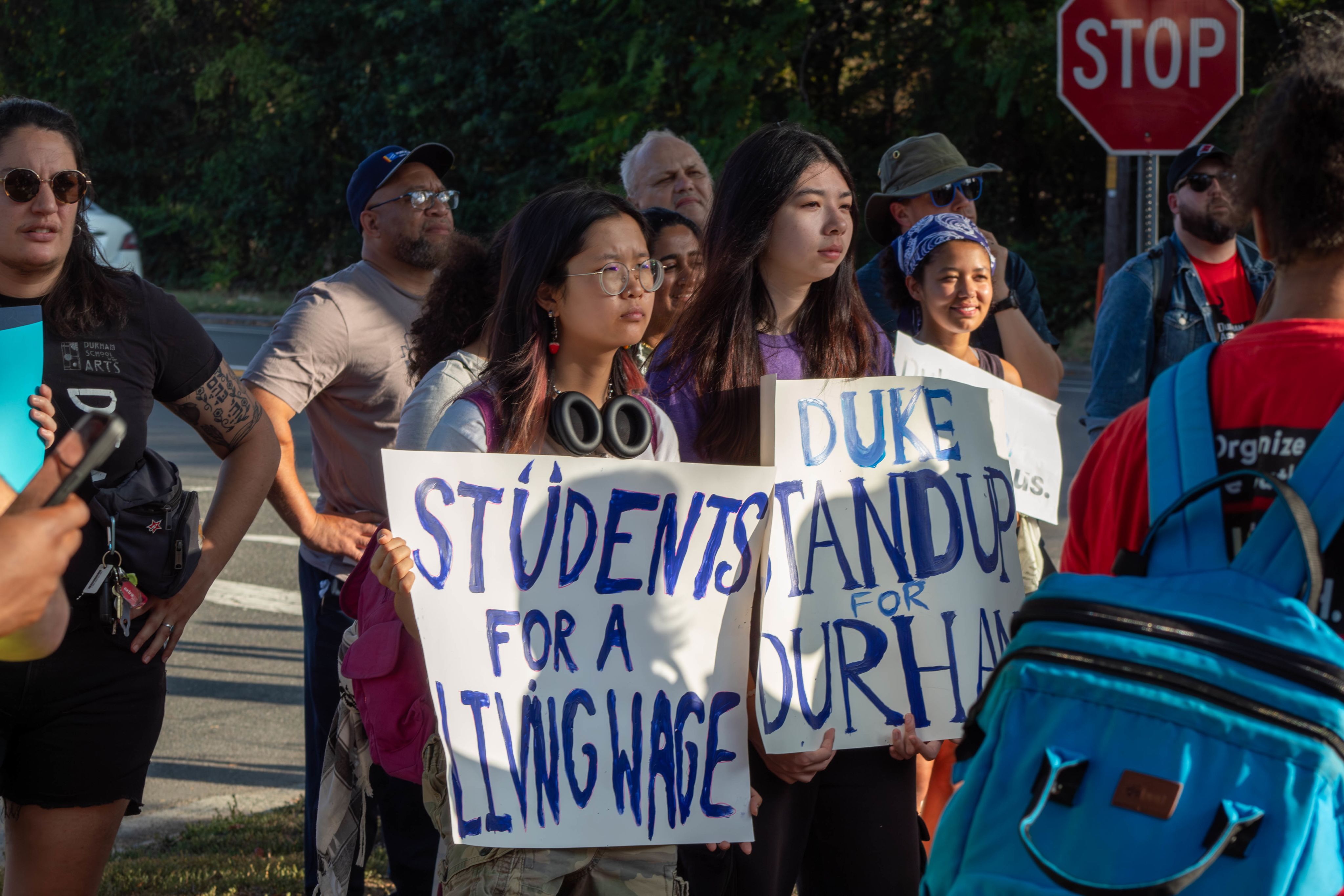
Duke students stand in solidarity with members of Durham Rising during the coalition's Founder's Day march. Photo by Nia Bedard.
Duke students stand in solidarity with members of Durham Rising during the coalition's Founder's Day march. Photo by Nia Bedard.
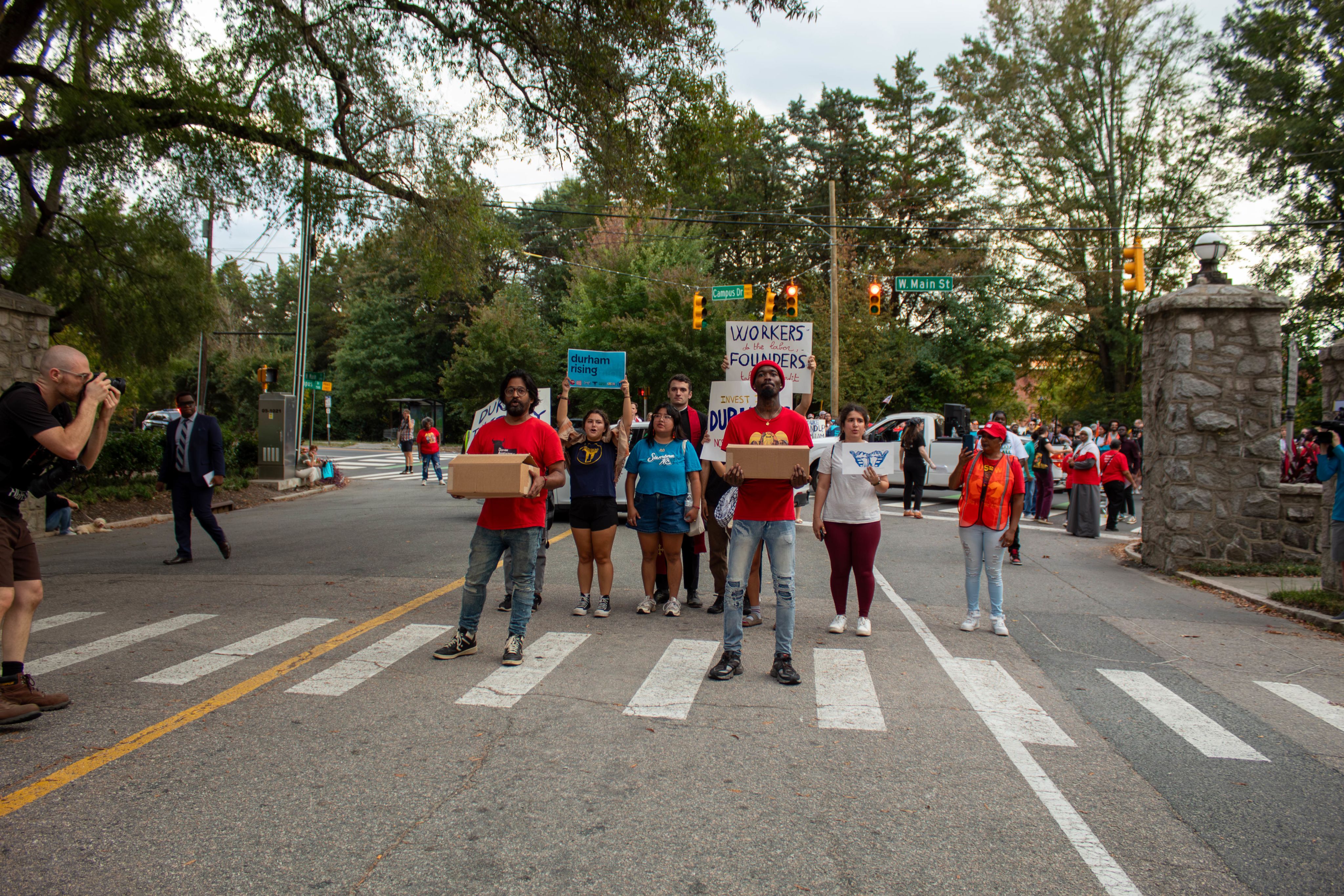
Members of Durham Rising drop their petitions off at the entrance to Duke University. Photo by Nia Bedard.
Members of Durham Rising drop their petitions off at the entrance to Duke University. Photo by Nia Bedard.
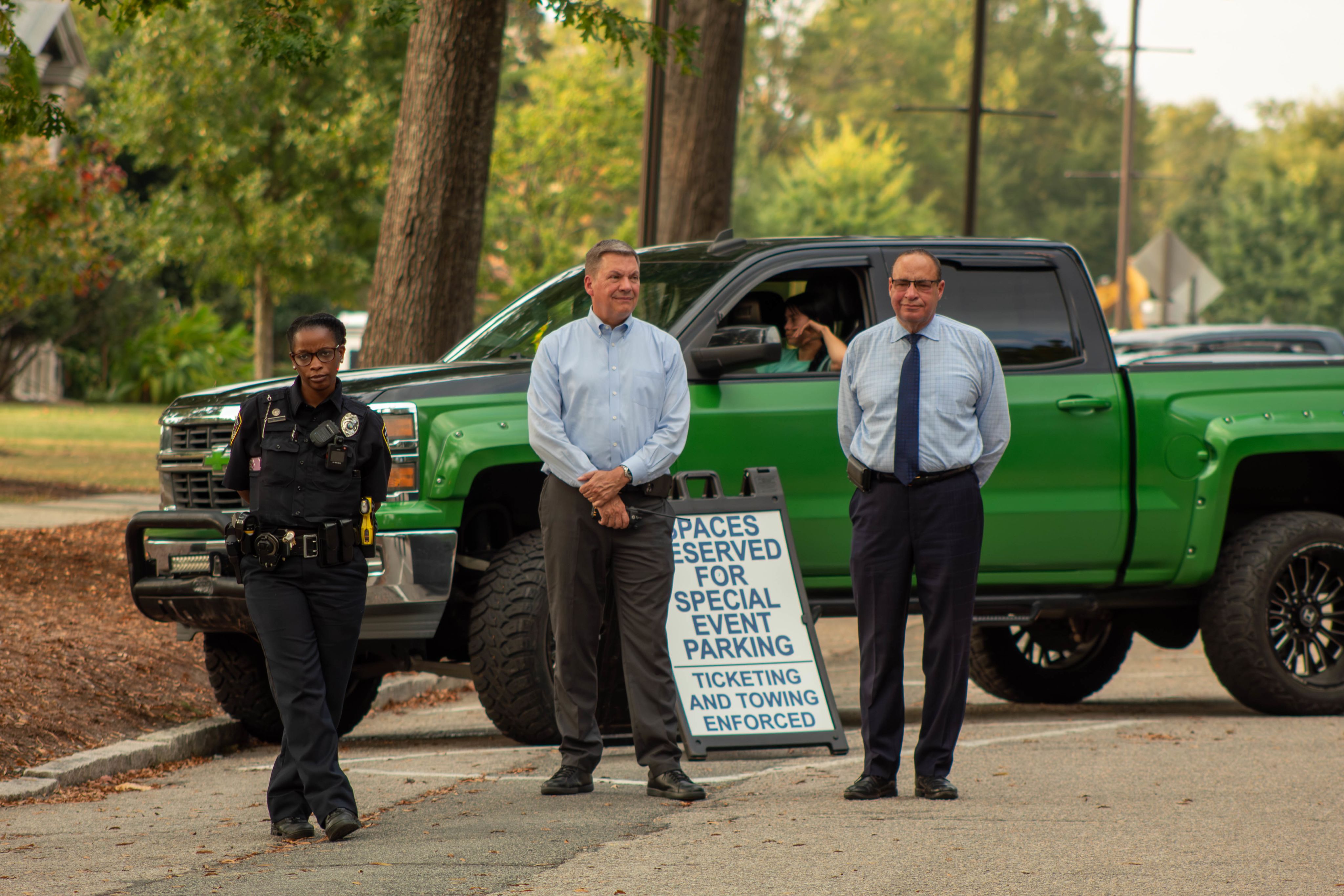
Employees of Duke University stand and watch Durham Rising at the entrance of the university. Photo by Nia Bedard.
Employees of Duke University stand and watch Durham Rising at the entrance of the university. Photo by Nia Bedard.

Duke students approach St. Joesph's Episcopal Church to march with Durham Rising. Photo by Nia Bedard
Duke students approach St. Joesph's Episcopal Church to march with Durham Rising. Photo by Nia Bedard
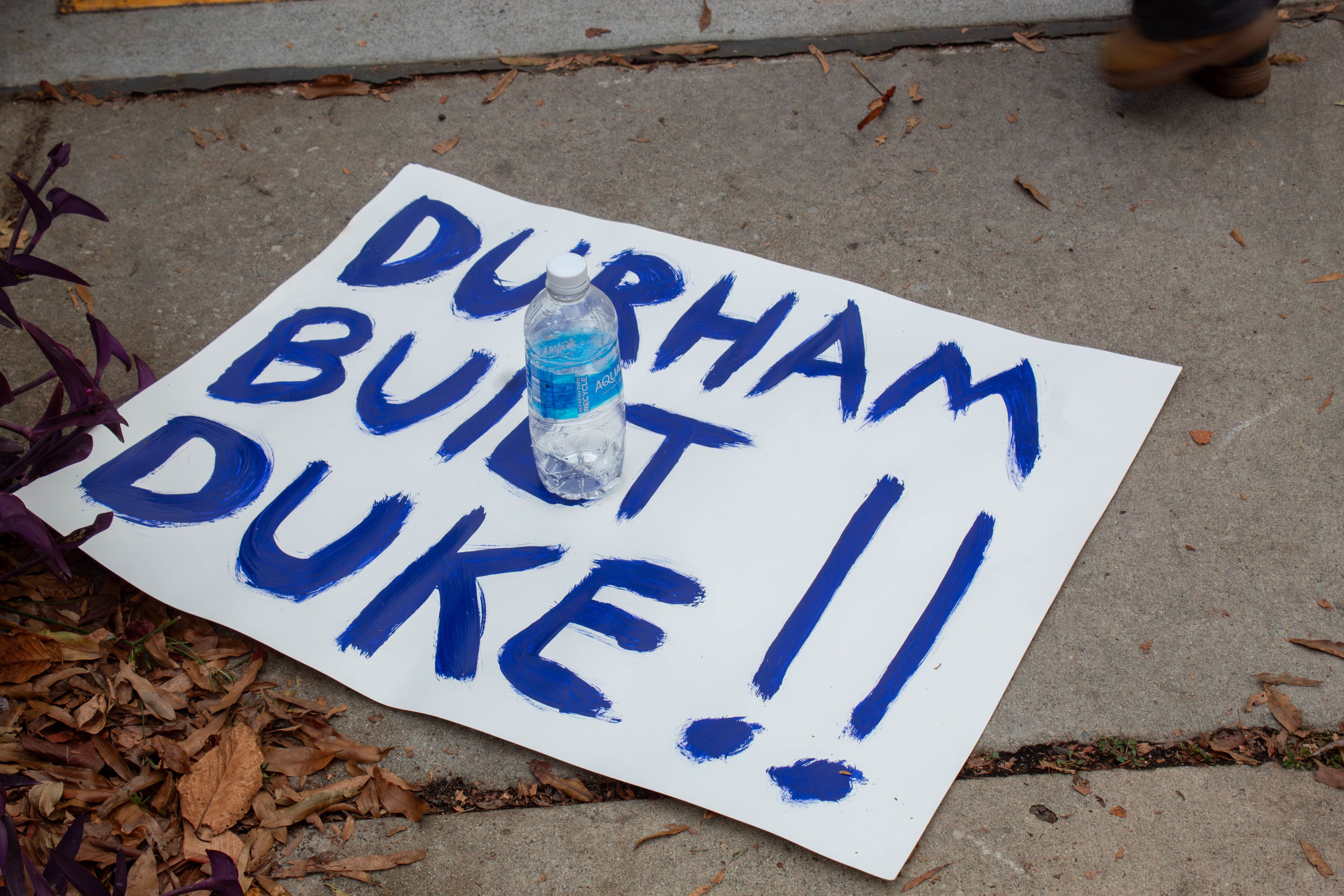
A sign that says "Durham Built Duke" is left at the entrance to Duke University. Photo by Nia Bedard.
A sign that says "Durham Built Duke" is left at the entrance to Duke University. Photo by Nia Bedard.
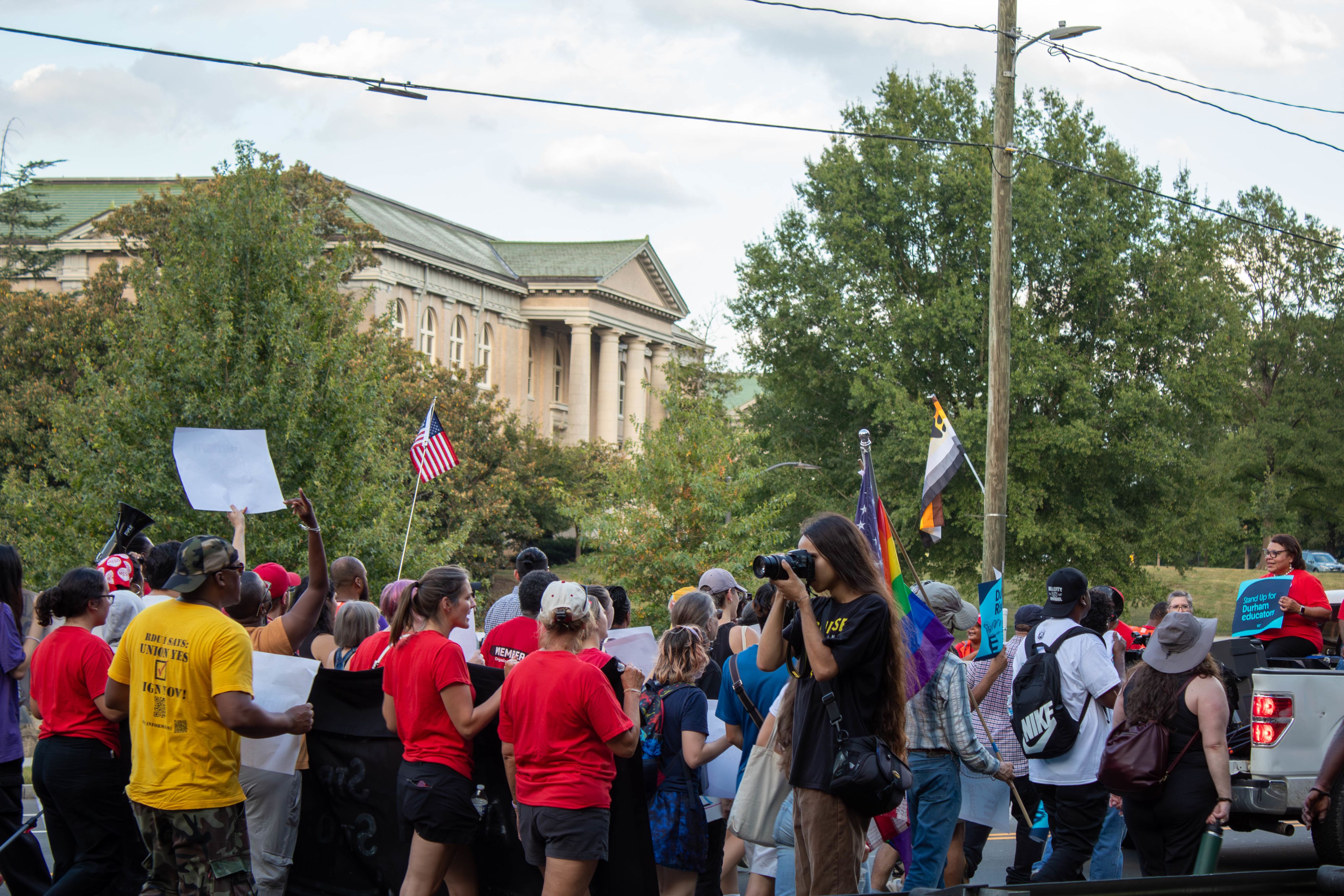
Durham Rising approaches Duke University to deliver their petition. Photo by Nia Bedard.
Durham Rising approaches Duke University to deliver their petition. Photo by Nia Bedard.
The coalition took to the streets on Sept. 25, Duke’s Founder’s Day to present copies of its petition with its demands that has now received over 10,000 signatures. Students, workers and community members marched across Broad Street in Durham to present copies of its petition to the university. University officials who were present on campus did not pick up the copies of the petition.
On Sept. 26 Duke students took petitions on to campus but were rejected by university officials. Duke University did not respond to requests for comment.
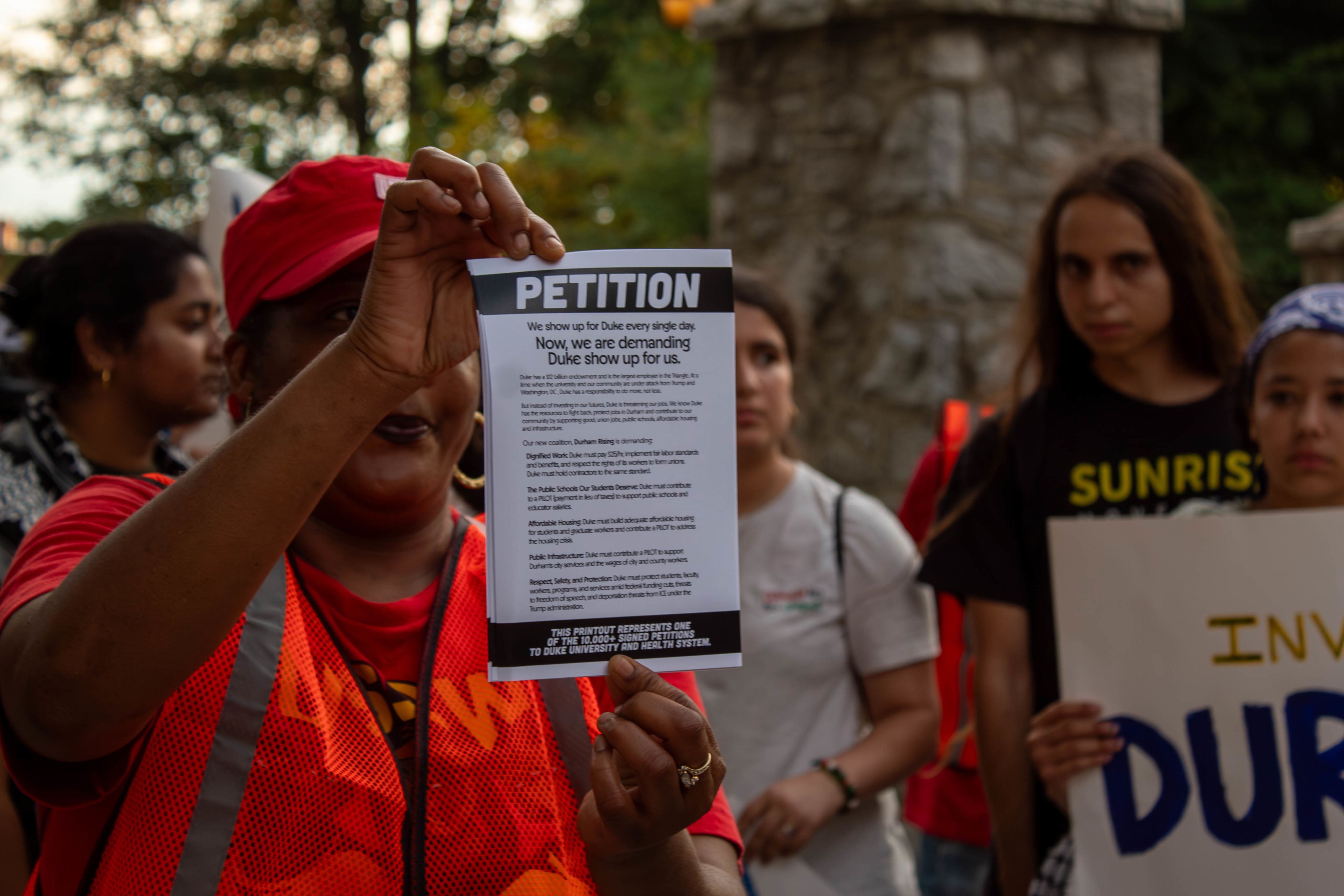
A member of the Union of Southern Service Workers holds up Durham Rising's petition at the entrance to Duke University. Photo by Nia Bedard.
A member of the Union of Southern Service Workers holds up Durham Rising's petition at the entrance to Duke University. Photo by Nia Bedard.
The county's 2026 budget did include an increase in funding for Durham Public Schools of $12.97 million.
The Duke Graduate Students Union has seen some success in negotiating with the university. In July 2025 DGSU ratified its first contract with the university after two years of strikes and negotiations. The agreement is the first of its kind amongst universities in the South.
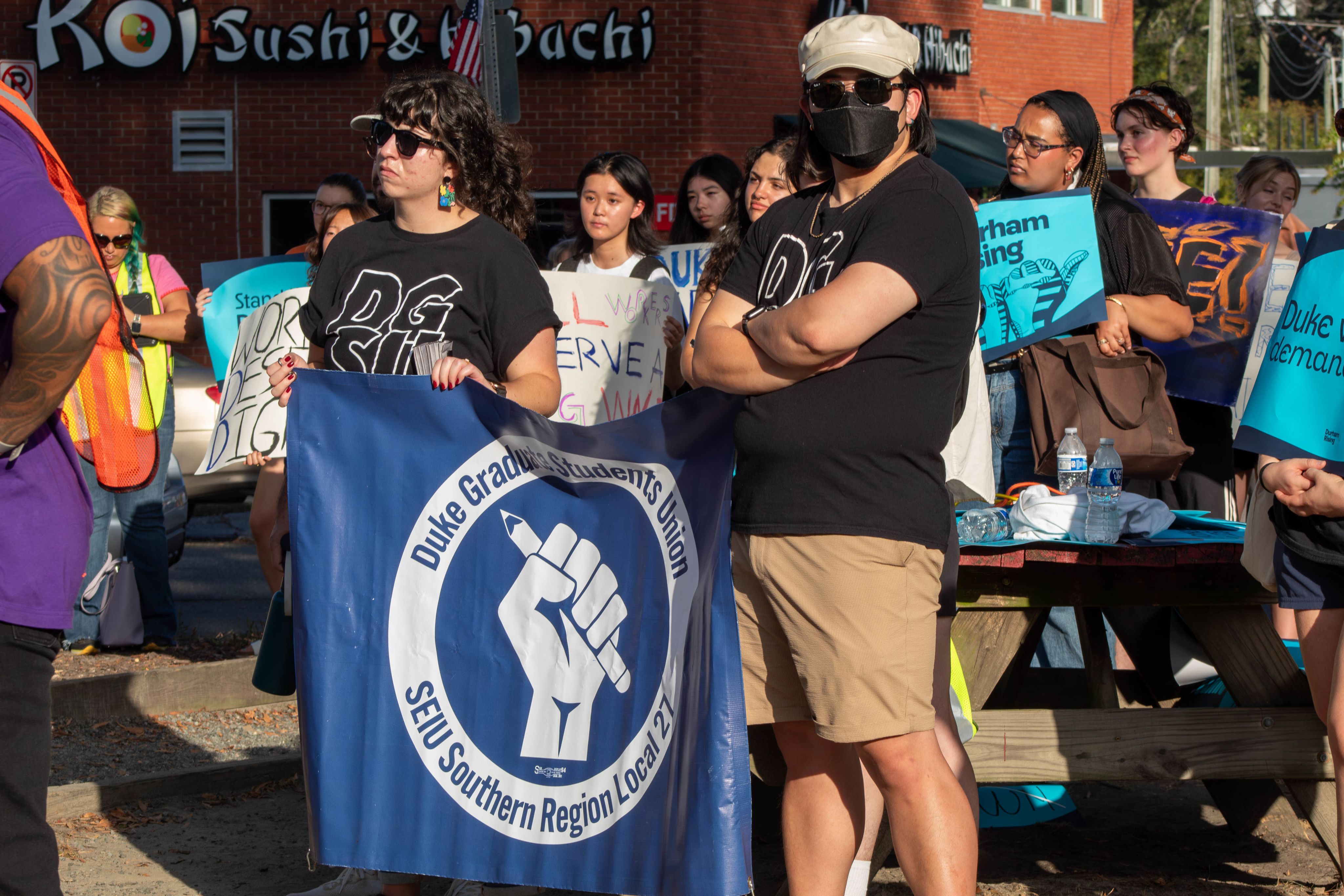
Members of the Duke Graduate Students Union stand in front of St. Joseph's Episcopal Church. The DGSU was able to reach their own contract with Duke University earlier this year. Photo by Nia Bedard
Members of the Duke Graduate Students Union stand in front of St. Joseph's Episcopal Church. The DGSU was able to reach their own contract with Duke University earlier this year. Photo by Nia Bedard
The DGSU’s contract, which included a raise for graduate students, stipends to increase at the same rate as regular-rank faculty, 9-week parental leave, protection for undocumented students and Deferred Action for Childhood Arrival students, and more.
The contract was approved by 99% of the voting members, according to the union’s Instagram page
Nashon Blount, a member of USSW said that the coalition’s next step is to wait.
“This is the time where we sit and wait and wait to see how everything is going to play out,” Blout said.
Members of the USSW lead the Founder's Day march down Broad Street towards Duke University. Photo by Nia Bedard
Members of the USSW lead the Founder's Day march down Broad Street towards Duke University. Photo by Nia Bedard
Regardless of the university’s lack of reaction, Dixon is also prepared to wait, continue to do her job and provide for her family.
“I'm still fighting, I do and I shouldn't be, it's still stressful,” Dixon said. “It's still frustrating to do. But every time I go with a smile on my face and I keep going. I keep fighting.”
Millie Rosen has taught in Durham public schools for 12 years and currently teaches at the Durham School of the Arts, said she has seen the ways financial stress has affected students whose parents work at Duke.
“I've taught kids whose parents work at Duke in housing and hospitality and university when they can't afford to pay rent and they're living all the time, or they're living in hotels that doesn't seem fair,” Rosen said. “It doesn't live up to this image Duke wants to portray. I would love to live in a city where the university that you know wants the town to kind of be proud of is also proud of the town they live in.”
In addition to marching to Duke, Durham Rising has gotten involved with the upcoming elections for the city of Durham. On Aug. 28 the coalition hosted a candidate forum for those running in the municipal election in November. Fourteen of the 18 candidates running, spoke at the forum.
Rosen said she thought a lot about which candidates would hold Duke accountable when voting early in the municipal elections.
“When I was choosing personally who to vote for, it was the candidates who were most vocally in support of this kind of work,” Rosen said. “Especially public schools as much funding as we can for them.”
While Duke has not responded to Durham Rising’s petition, Dixon hopes that Duke will follow through for the sake of its image in the community.
“They can play a big role in doing all that for the community,” Dixon said. “I feel like the Durham community would have more respect for Duke when they see that instead of Duke just not doing that.”
 Built with Shorthand