
Human trafficking in Alamance County and the fight led by CrossRoads
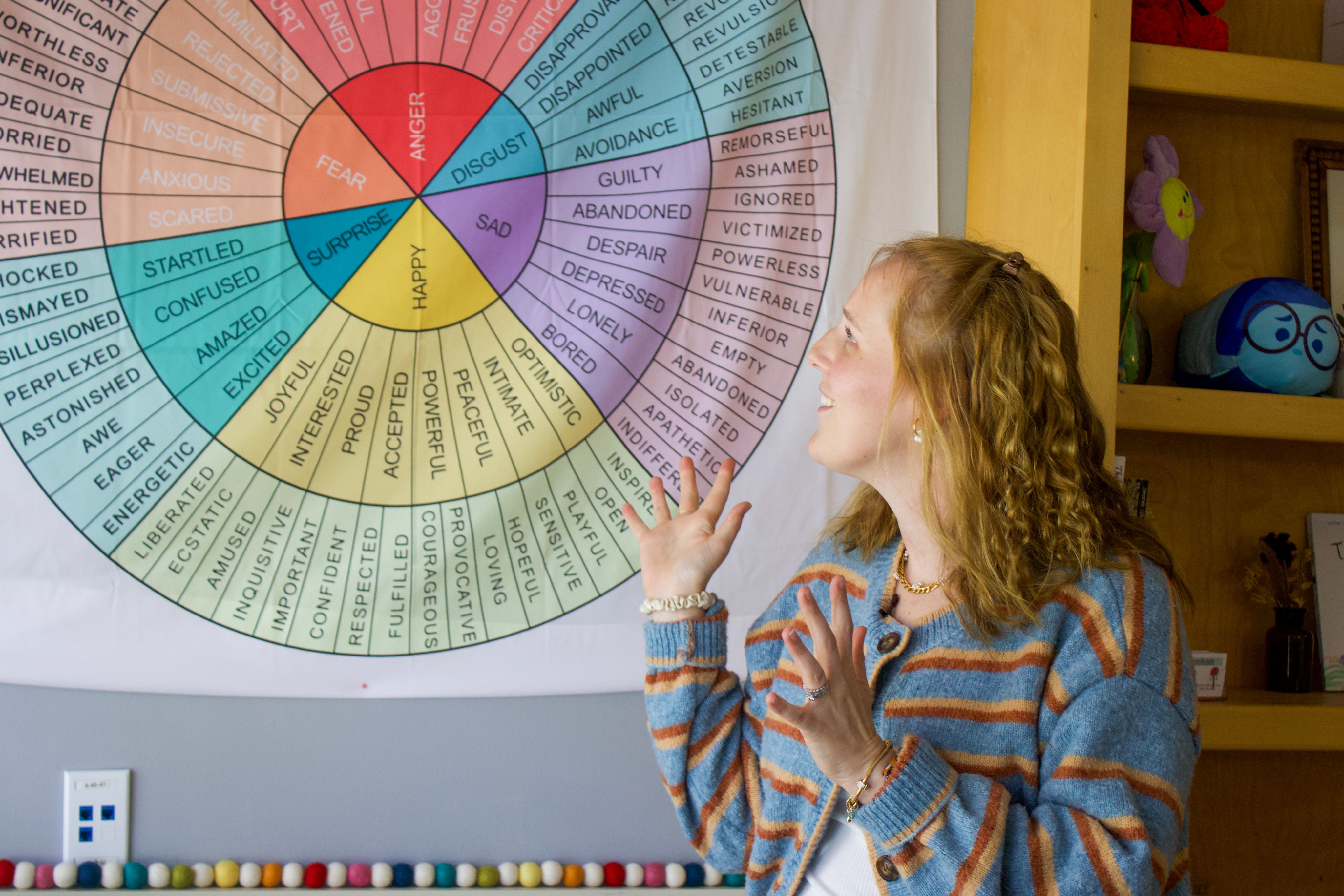

Christa Hippe was just 12 years old when the sexual abuse began. The abuse was from someone her family trusted, and it went on for years before she knew what human trafficking meant.
“As a young child, I was traumatized,” Hippe said.
By 14, she was running away with older friends who had cars, money and alcohol — things she thought made them cool.
“One of the first things traffickers do in my experience, and in the experience of some of the kids that I've supported, is they offer them drugs, alcohol, they make you feel grown,” Hippe said. “They get your boundaries weak.”
She said that after one occurrence, victims can feel full of shame and almost stuck in the situation. She said that she saw one abuser as her boyfriend and love interest. She said that one night after a concert, she was drugged at a party.
“I didn't even know I was being trafficked,” she said. “I thought I went to a party. Someone gave me a bad drink. These bad things happened, and somehow I ended up stuck with these people. And I got close to one of them, and he became both my protector and my abuser."
Now, almost 20 years later, Hippe works at CrossRoads Sexual Assault Response & Resource Center, a Burlington nonprofit that supports survivors of sexual assault and human trafficking. She found herself using CrossRoads resources in the 1990s after a friend recommended their services.

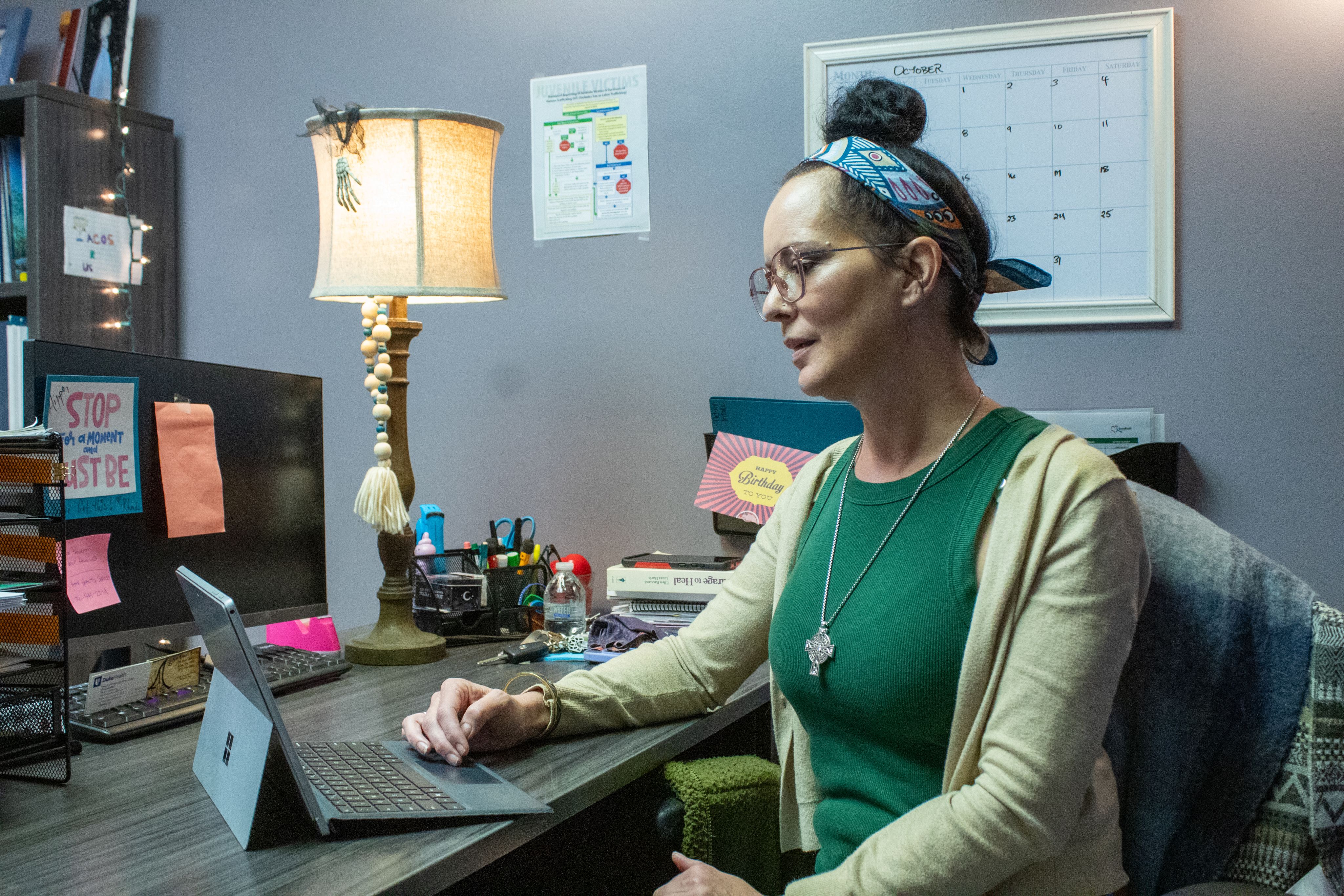
Christa Hippe sits at her desk on Oct. 10 at CrossRoads Sexual Assault Response & Resource Center Hippe is a survivor of sex trafficking. Photo by Anjolina Fantaroni
Christa Hippe sits at her desk on Oct. 10 at CrossRoads Sexual Assault Response & Resource Center Hippe is a survivor of sex trafficking. Photo by Anjolina Fantaroni
“She came here, and she started telling me about how much CrossRoads was helping her, and that she thought it would be a good idea for me,” Hippe said.
Hippe eventually began a career devoted to helping others find the same strength and support she once needed herself.
As an advocate, Hippe empowers her clients who walk through the door, both children and adults. She said that she hosts something special at CrossRoads — support sessions.
“I kind of help them with coping skills and recognizing their feelings and how they feel in their body, and then what to do after that, when they have these icky feelings in their body.”
“I kind of help them with coping skills and recognizing their feelings and how they feel in their body, and then what to do after that, when they have these icky feelings in their body,” she said.
However, Hippe said that most clients don’t know what the word advocate means at first.
“I tell them, ‘It means I'm here to support you. I work for you. I work for your family,’” Hippe said.
Hippe is one of many advocates at CrossRoads.
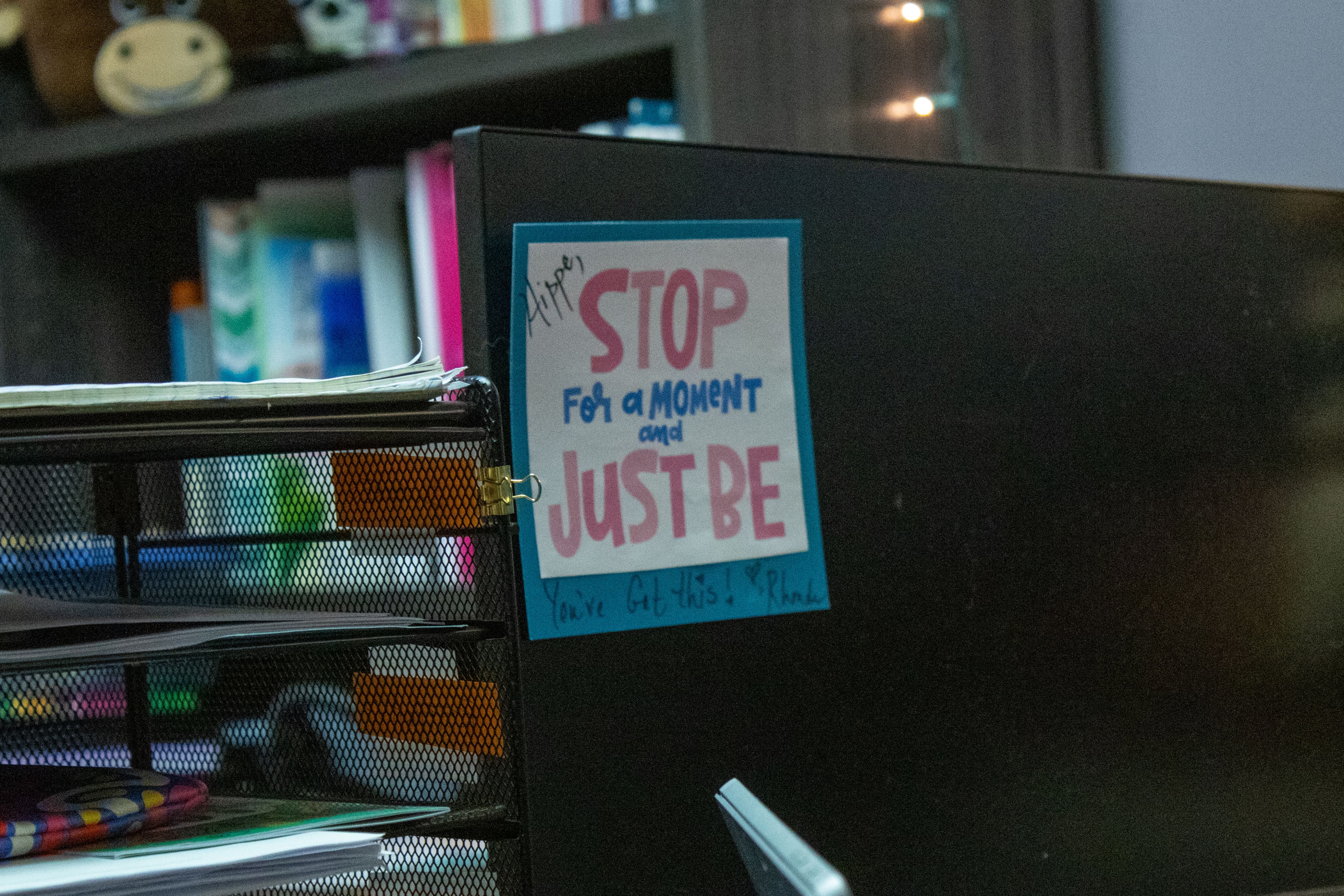
A sticky note card that reads, "Stop For a Moment and Just Be," sticks to Christa Hippe's desktop computer in her office on Oct. 10 at CrossRoads . The card is a positive affirmation gift from her co-worker, Rhonda Chaney. Photo by Anjolina Fantaroni
A sticky note card that reads, "Stop For a Moment and Just Be," sticks to Christa Hippe's desktop computer in her office on Oct. 10 at CrossRoads . The card is a positive affirmation gift from her co-worker, Rhonda Chaney. Photo by Anjolina Fantaroni
The Fight Led by Advocacy
When Rhonda Chaney took a break from her job at Child Protective Services, she began working at CrossRoads.
“I'm at a point in my life and in my career where I want to see the outcomes of positive services and how they would impact children, families and adults," Chaney said.
Rhonda Chaney explains what being an advocate is in her own words.
Chaney is not only an advocate for CrossRoads but also the director of advocacy services, where she oversees client services for children and adults by managing the advocacy staff. Before joining the nonprofit, she worked at Child Protective Services as a social worker.
“I value CrossRoads more today than I did the day that I started,” Chaney said. "That reason is because it provides a service that, if I had as a young Child Protective Services social worker, might have saved more lives, not just for children, but for adults."
CrossRoads originally began as the Rape Crisis Alliance in 1976, after a police officer had raped a Black woman in Burlington. The founders included Kathy Hykes, Barbara McCall and Caroline Ansbacher. The agency has since grown to provide services to child survivors of sexual violence and victims of trafficking.
According to Chaney, CrossRoads has always provided advocacy services for victims who arrive at the hospital after a sexual assault, human trafficking event or case of child maltreatment. Beginning this year, she will do something that she hopes will make them feel like a human being when they walk out of the doors of the hospital — provide comfort bags.

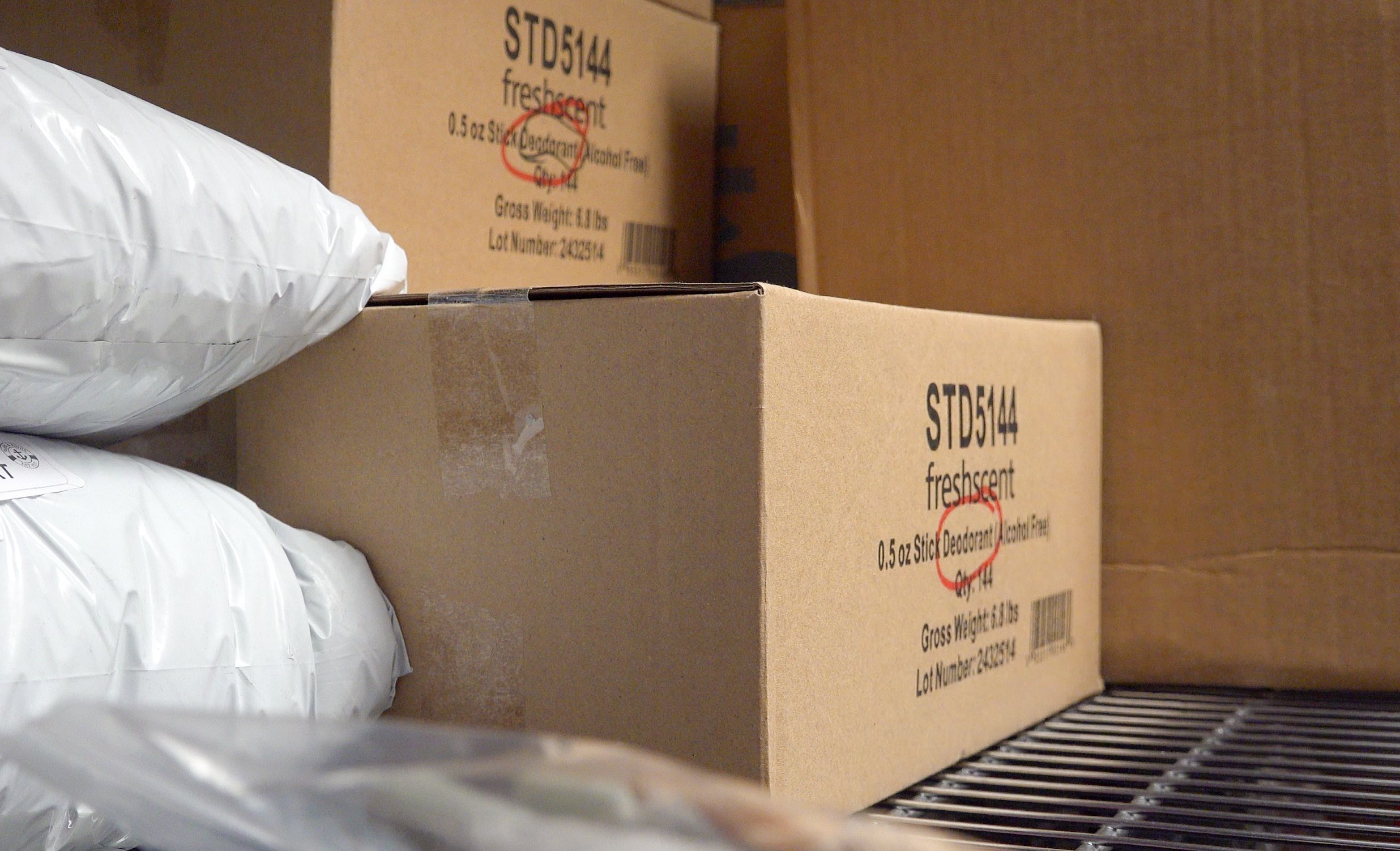
A box with travel-size stick deodorants sits in a storage room on Sept. 19 at CrossRoads, waiting to be packaged in the comfort bags. Photo by Anjolina Fantaroni
A box with travel-size stick deodorants sits in a storage room on Sept. 19 at CrossRoads, waiting to be packaged in the comfort bags. Photo by Anjolina Fantaroni
When adults undergo a sexual assault exam at a hospital, their clothing is often collected as evidence — part of a difficult and lengthy process that can take several hours.
“Those bags are going to include a pair of sweatpants, a T-shirt, bras and underwear, personal care items, hygiene items, and some inspirational types of things to teach, to tell them that they can keep going,” she said. “And a blanket.”
Care bags will also be created for children and adults to stay calm during court dates.
“It's going to be things like fidget toys and coloring books, and I think we even talked about putting clay in there or just little journals, ink pens, things like that,” Chaney said.
One of the main things CrossRoads is known for is its Child Advocacy Center, where the first step is to bring the child for a special type of interview inside the center. Chaney said that these interviews are done by professionals trained to interview children in a non-leading and non-threatening way.
“When law enforcement contacts us and says they have an adult who's been raped or is a survivor of childhood sexual abuse or is a victim of human trafficking, and they want to interview that person, and they bring them to this space — as opposed to interviewing them in the cold, damp areas in the police department,” Chaney said.
Rhonda Chaney explains how any victim will receive help when they first walk into CrossRoads.
Funded through the University of North Carolina at Chapel Hill, CrossRoads also offers a child medical evaluation program that allows the center to hire physicians and pediatricians trained in child abuse and neglect. Chaney said pediatricians conduct medical evaluations to gather information about a case and perform a physical, noninvasive exam.
“It makes a child feel safe and comfortable in an exam space where they might not normally feel safe and comfortable,” Chaney said.
Inside the interview room are two overstuffed chairs — one for the interviewer and one for the victim — a small table and a box of tissues. For children, several coloring books, fidget toys and CrossRoads teddy bears sit on the side of the room.
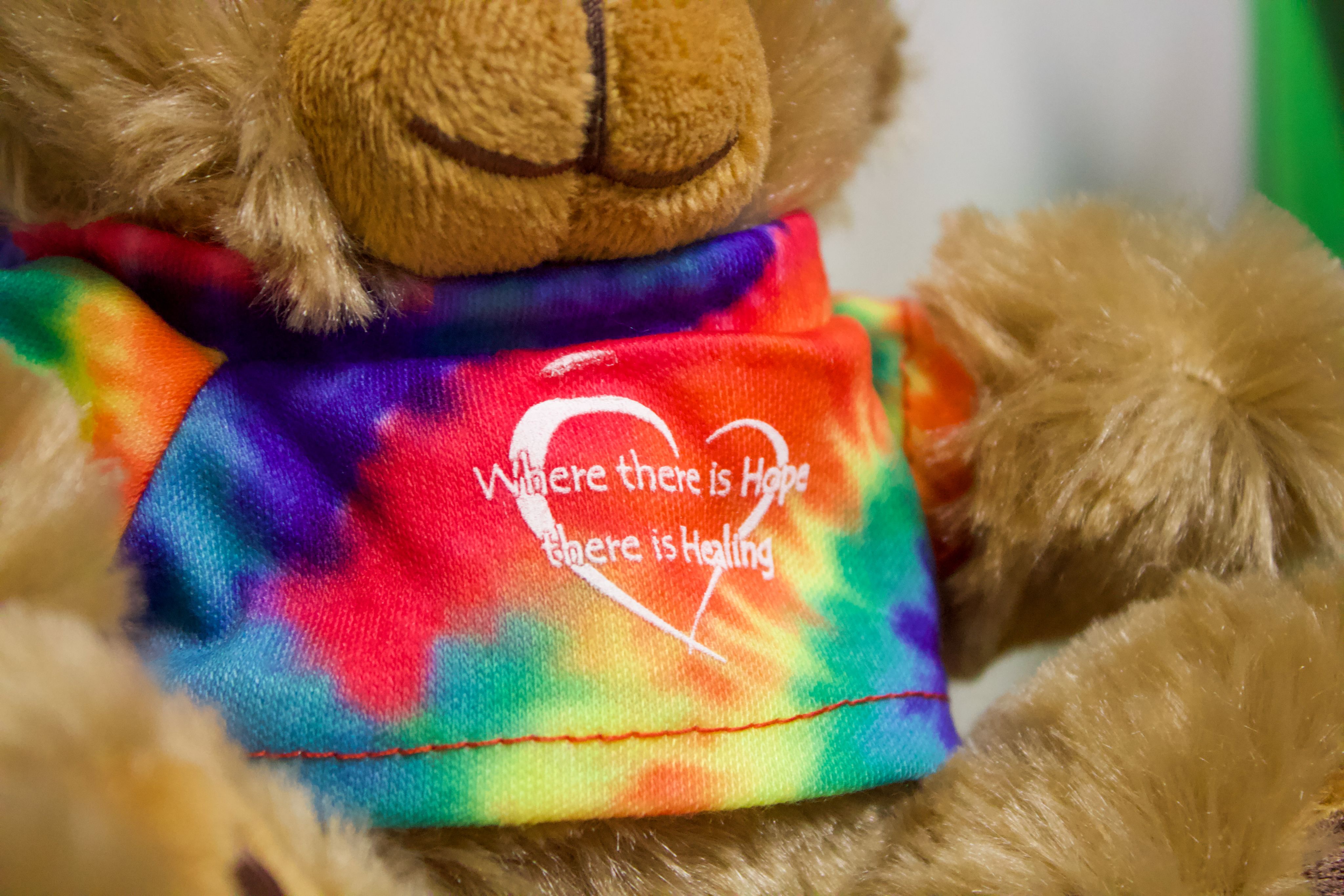
A CrossRoads teddy bear wears a tie-dye shirt that reads "Where there is Hope, there is Healing," on Oct. 10 and sits in the interview room at the CrossRoads Sexual Assault Response & Resource Center. Photo by Anjolina Fantaroni
A CrossRoads teddy bear wears a tie-dye shirt that reads "Where there is Hope, there is Healing," on Oct. 10 and sits in the interview room at the CrossRoads Sexual Assault Response & Resource Center. Photo by Anjolina Fantaroni
Chaney said she uses the word “victim” loosely because staff members at CrossRoads oftentimes refer to people who walk in the doors as victims — but sometimes, those individuals prefer to be called survivors.
The interview room is soundproof, with a microphone hidden behind the chair where the interviewee sits and cameras mounted in the ceiling. Those cameras allow investigators and advocates to observe the interview in real time, Chaney said.
Amanda McDaniel, a detective with the Alamance County Sheriff’s Office, said that CrossRoads is where the Sheriff's Office conducts its interviews as well.
“If there are children that we think are being trafficked or are sending CSAM [child sexual abuse material] images or receiving images, we will do our forensic interviews there so they also feel comfortable,” McDaniel said.
McDaniel said one major reason for trafficking in Alamance County is because of the proximity to the interstate.
“Traffic is continuous, it's the same,” she said. “Here you have the truck stops, you have both 40 and 85 coming through, it's just the free gambit of the interstate.”
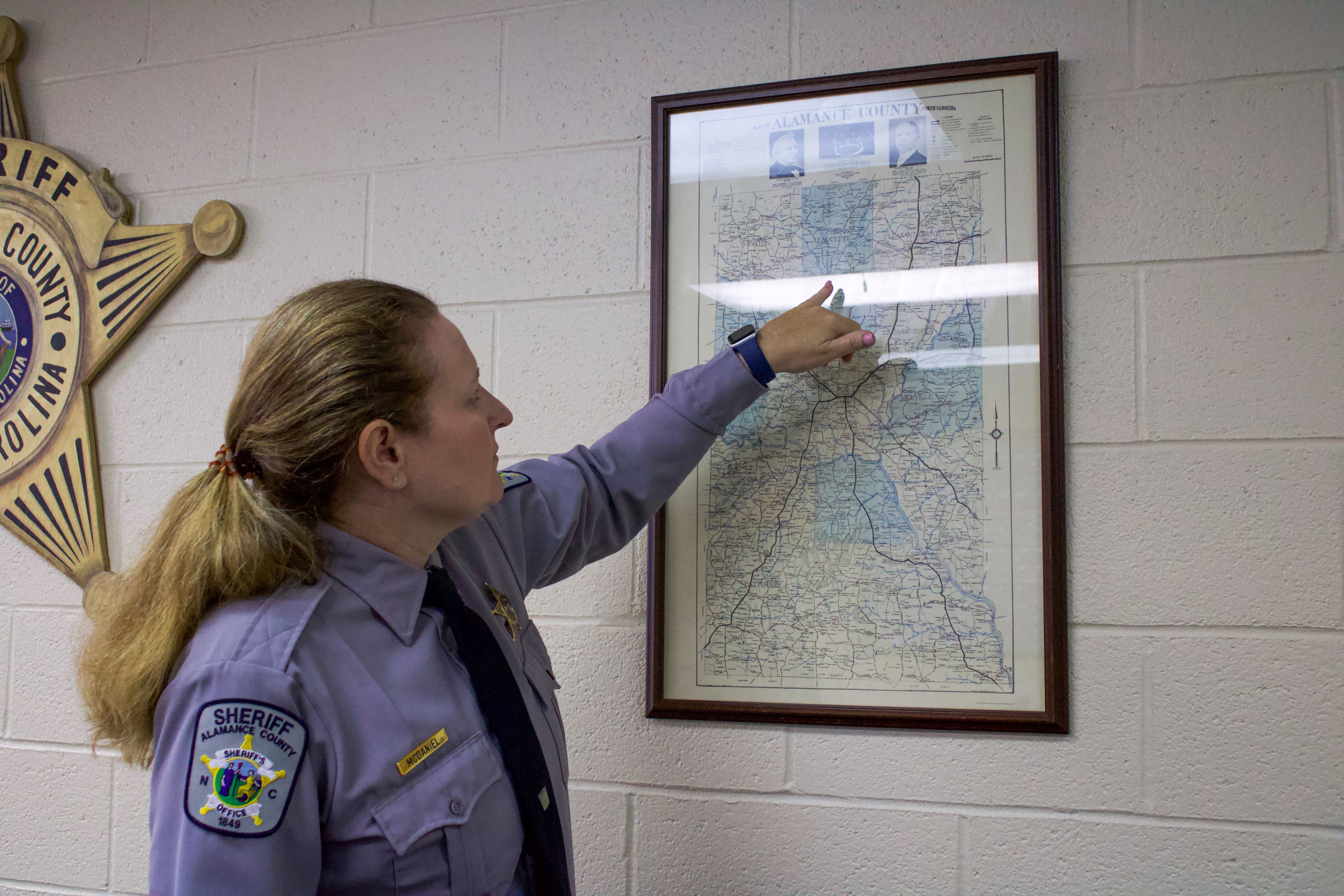
Detective Amanda McDaniel with the Alamance County Sheriff's Office points to a map of Alamance County and highlights the Interstate, where trafficking could take place, on Sept. 29 at the Alamance County Sheriff's Office. Photo by Anjolina Fantaroni
Detective Amanda McDaniel with the Alamance County Sheriff's Office points to a map of Alamance County and highlights the Interstate, where trafficking could take place, on Sept. 29 at the Alamance County Sheriff's Office. Photo by Anjolina Fantaroni
The most recent human trafficking data for Alamance County is from 2019, according to the North Carolina Judicial Branch. That year, there were 16 reported cases within the county. Data after 2019 has not yet been released.
According to data from the National Human Trafficking Hotline, human trafficking can take many forms and happen in a variety of locations.
McDaniel said many people live in a bubble and don’t know that trafficking is prevalent in the county.
“Unfortunately, it's everywhere,” she said. “They need to be aware of what's going on and be aware of their neighbors, people coming in and out of houses in the middle of the night, have people move in for a week, and then all of a sudden, they're gone. They need to be aware.”
The Fight Led by CrossRoads' Therapy
Up the stairs, down the hallway and before the second-floor CrossRoads lobby is a small, cozy room on the right. Inside is Devyn Waldron, the therapist at CrossRoads. A lifelong Alamance County resident, Waldron first came to the center as a high school junior through an internship.
“I fell into doing clinical social work, which is basically therapy,” she said. “I found out that I was very passionate about it, and so I begged them here at CrossRoads for a therapy job as I was finishing up grad school, and it just worked out.”
Clients who use CrossRoads’ resources can also seek therapy if they choose. Waldron said there is no timeline for healing from trauma as severe as trafficking.
“There's no right way to heal from trauma.”
“There's no right way to heal from trauma,” she said. “So it's really dependent on if that's a service they're wanting, and if they're ready for that,” Waldron said.
The therapy room is covered with colorful tapestries, fidget toys, and several child and family-friendly books. Waldron said it’s not just about adding color, but making the space feel comfortable — a place where sitting crisscrossed feels normal.

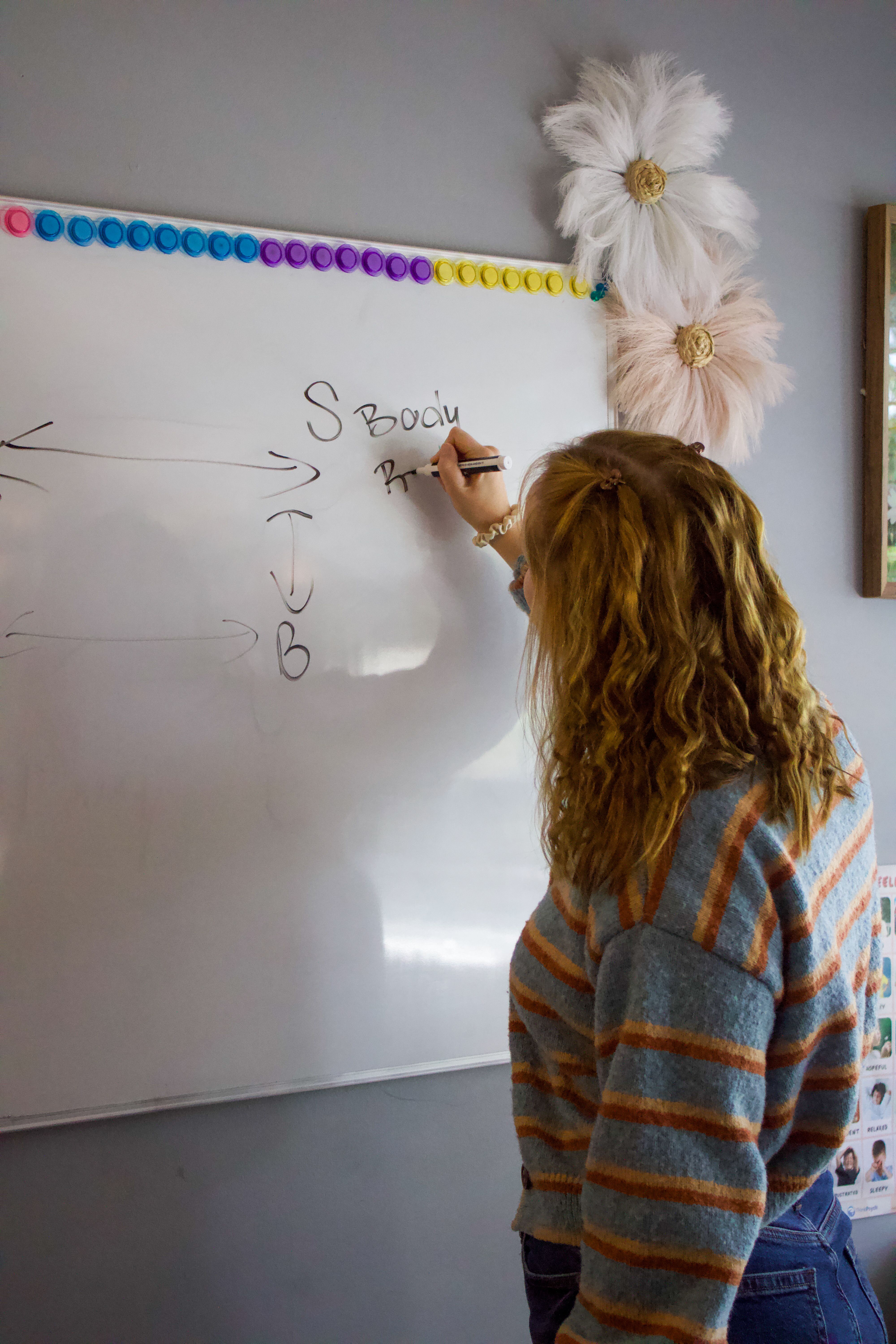
Devyn Waldron, the therapist at CrossRoads, writes the connections between thoughts, feelings, sensations and behaviors on the whiteboard in her office on Oct. 10 at CrossRoads Sexual Assault Response & Resource Center. Photo by Anjolina Fantaroni
Devyn Waldron, the therapist at CrossRoads, writes the connections between thoughts, feelings, sensations and behaviors on the whiteboard in her office on Oct. 10 at CrossRoads Sexual Assault Response & Resource Center. Photo by Anjolina Fantaroni
“You don't have to be on your best behavior,” she said. “It feels homey and comfortable, and that you get to be whoever it is you want to be, not who you think you have to be in this space,” Waldron said.
Waldron said that her job is totally separate from everything that happens downstairs, such as medical and forensic interviews.
“I might be asking you questions about this, but it's because I want you to understand that I can help you and see how I can be of service to you and to help you move forward,” Waldron said.
CrossRoads is a regular presence at Alamance County festivals and community events, sharing information with people who may not know about its services. Waldron said they do that to show they are a part of the community.
“We're on the totally opposite side of town from Elon, but we serve this entire county,” she said. “We will be in Elon one day, but Snow Camp the next, and then like Mebane the next day. No matter where you are, this is a place for you, and no matter where your background is or any of those things, this is a place for you.”

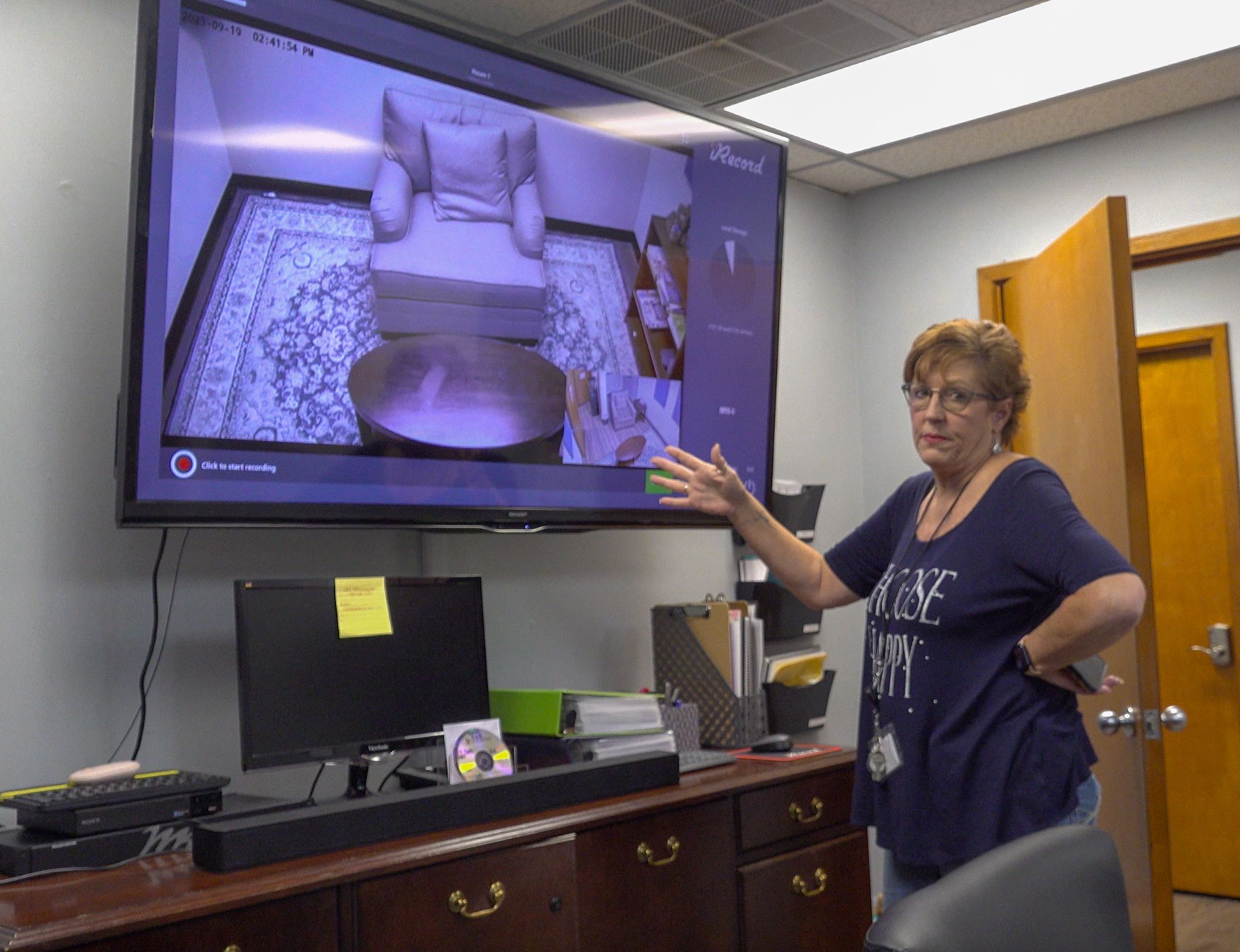
Rhonda Chaney, director of advocacy services at CrossRoads, explains the interview room and viewing room, where staff members watch a forensic interview in real time on Sept. 19 at the CrossRoads Sexual Assault Response & Resource Center. Photo by Anjolina Fantaroni
Rhonda Chaney, director of advocacy services at CrossRoads, explains the interview room and viewing room, where staff members watch a forensic interview in real time on Sept. 19 at the CrossRoads Sexual Assault Response & Resource Center. Photo by Anjolina Fantaroni

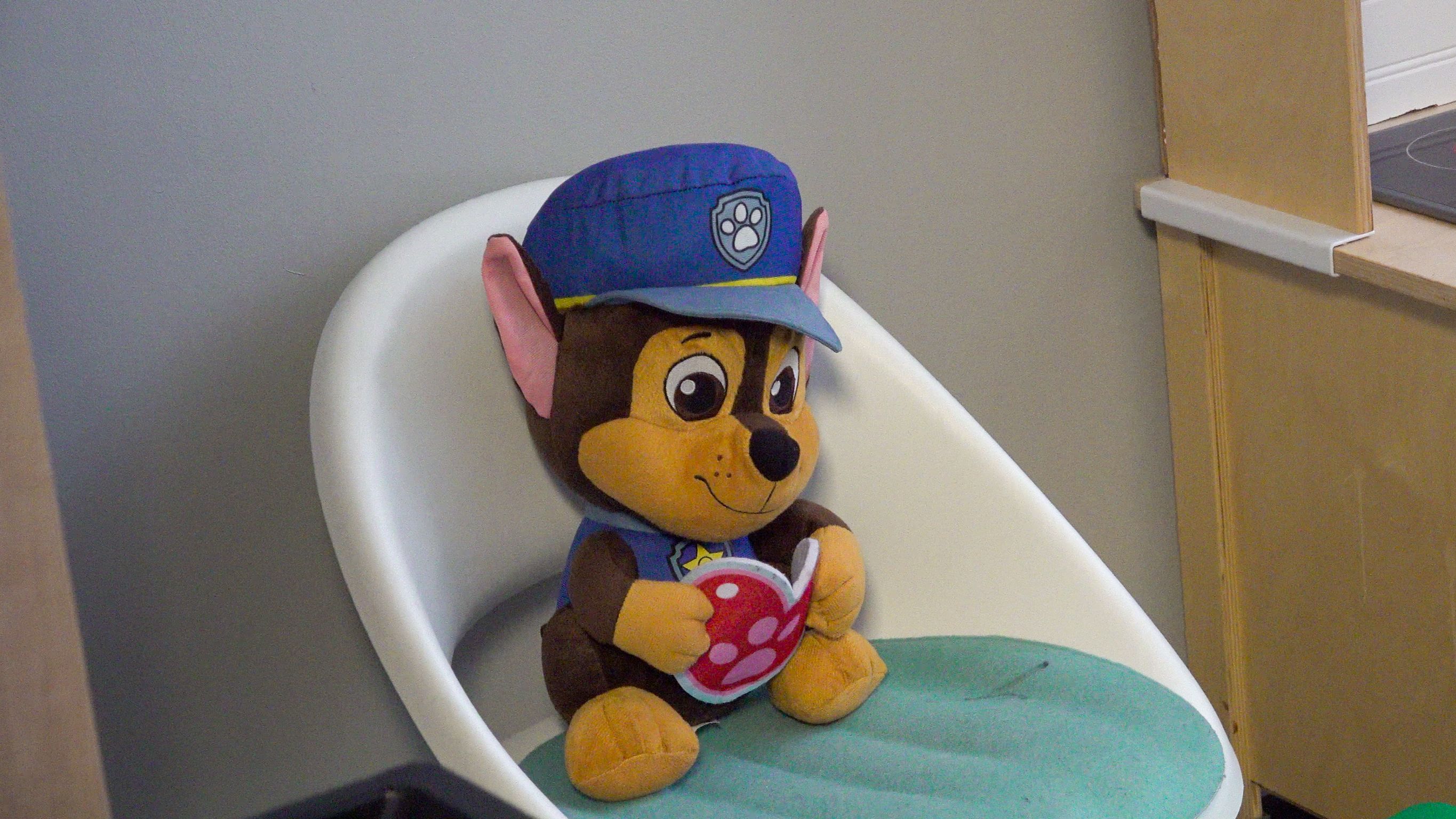
Chase, a German Shepard from Paw Patrol, a children's cartoon, sits in a children's waiting room at CrossRoads on Sept. 19. Photo by Anjolina Fantaroni
Chase, a German Shepard from Paw Patrol, a children's cartoon, sits in a children's waiting room at CrossRoads on Sept. 19. Photo by Anjolina Fantaroni

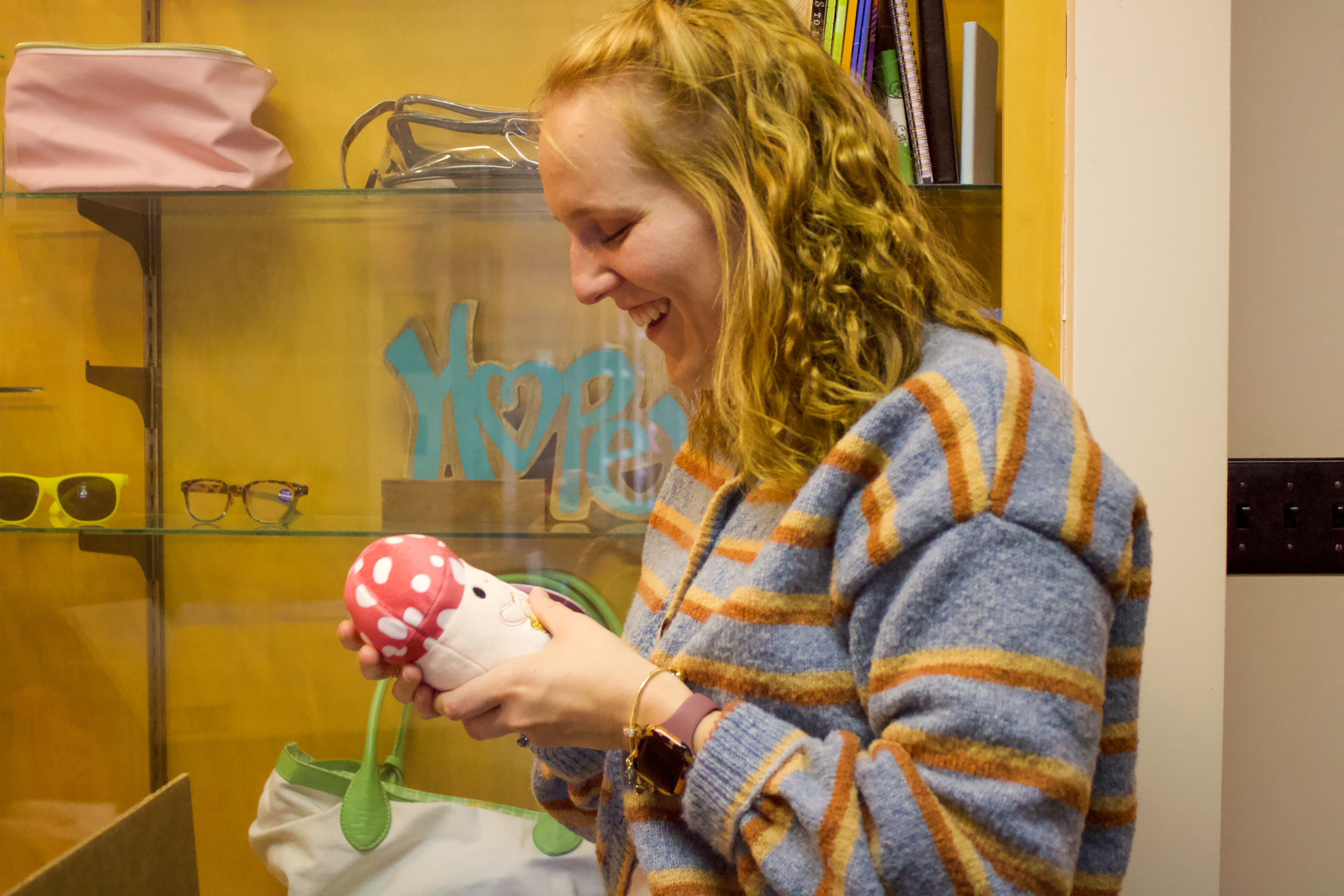
Devyn Waldron, the therapist at CrossRoads, picks up a mushroom Squishmallow on Oct. 3 inside the Hope Room at CrossRoads, where several items have been donated for children and families. Photo by Anjolina Fantaroni
Devyn Waldron, the therapist at CrossRoads, picks up a mushroom Squishmallow on Oct. 3 inside the Hope Room at CrossRoads, where several items have been donated for children and families. Photo by Anjolina Fantaroni
 Built with Shorthand